 WeCult App
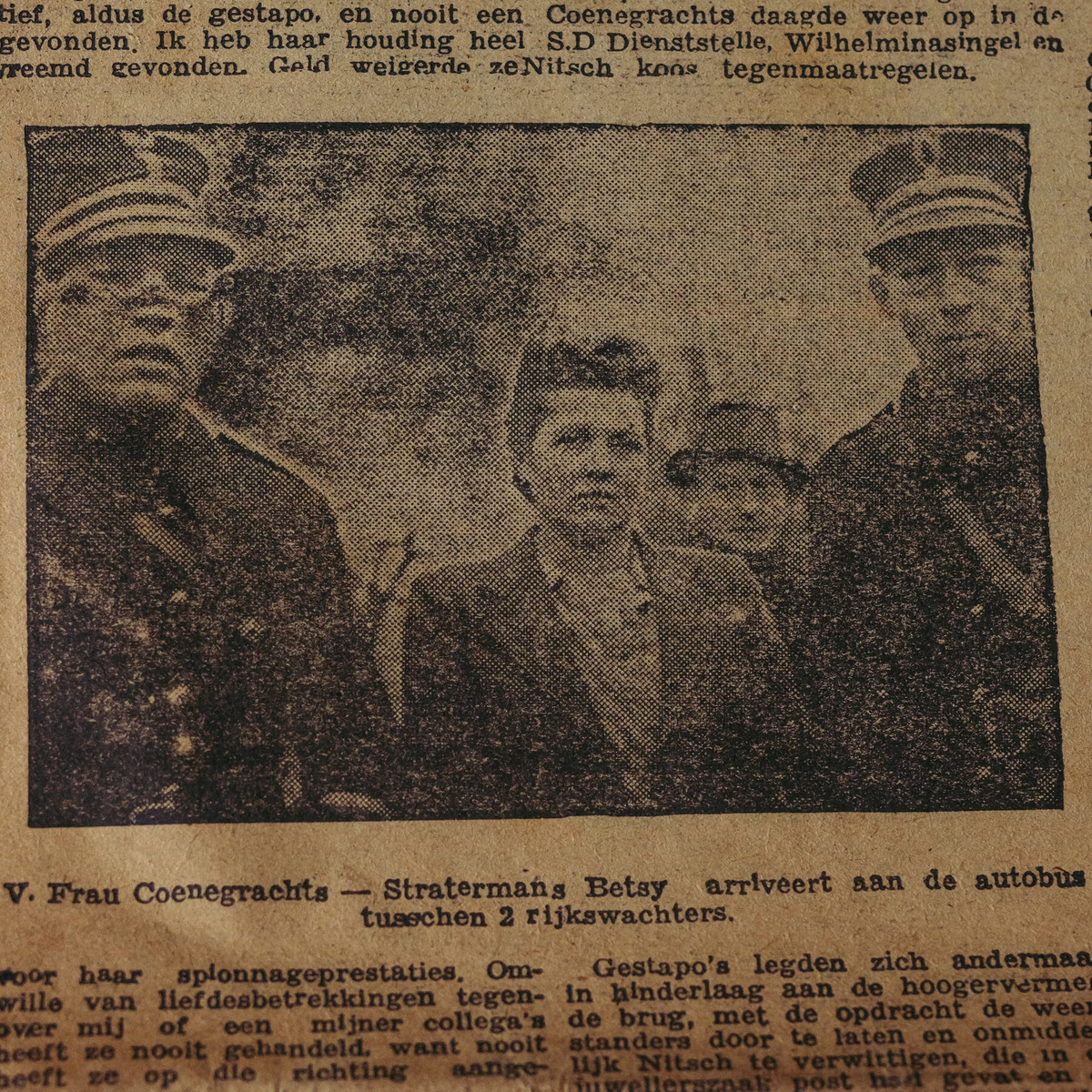
Author's Family Nazi Past Uncovered After Stranger Offers Secret Files
A woman's search for her family's Holocaust history took a sharp turn when a stranger offered to share her grandmother's Nazi collaboration file. This unexpected discovery sparked a complex dispute, forcing a confrontation with a hidden legacy.
When Judith Zilversmit embarked on uncovering her family's history during the Holocaust, she likely didn't anticipate the tangled ethical web that would emerge. Her journey into the past became unexpectedly entangled with a stranger's revelation: a Belgian woman named Ingeborg Boelen had obtained criminal files detailing her own grandmother's collaboration with the Nazis during World War II. Boelen, living near the Dutch border, reached out to Zilversmit, offering to share this deeply personal and disturbing information. Zilversmit, still processing the enormity of this offer, remembers being so startled that she quickly dismissed the message, a moment that would later fuel a new layer of conflict.
This incident, detailed in Zilversmit's exploration of her family's past, highlights a growing trend of individuals confronting uncomfortable truths hidden within their ancestry. The accessibility of historical archives, coupled with a modern willingness to scrutinize family histories, is bringing long-buried secrets to light. Unlike the fictionalized accounts that often dominate our screens, these are real-life investigations into collaboration, betrayal, and the enduring consequences of historical atrocities. The story echoes others, like Martin Pollack's confrontation with his father's wartime actions or Kerrie Taber's discovery of her grandfather's identity as a Nazi war criminal. The increasing digitization of records, such as the Nazi Party membership lists now available online, further empowers individuals to unearth these difficult narratives.
A Family's Moral Quandary
The offer from Ingeborg Boelen wasn't just an exchange of information; it was an invitation into a moral labyrinth. Zilversmit's initial shock gave way to a complex situation when she later tried to reconnect, only to find Boelen had become hesitant. This hesitation led to a new dispute, underscoring the profound emotional and ethical weight carried by such revelations. The act of sharing or withholding these files becomes a significant decision, impacting not only the families directly involved but also our broader understanding of complicity and remembrance. The very nature of confronting historical evil is often fraught with personal and relational challenges, making this a story that resonates with anyone who has grappled with inherited legacies.
The Wider Conversation on Confronting the Past
As more historical records become accessible, stories like Zilversmit's are becoming more common, sparking vital conversations about how societies and families reckon with their Nazi pasts. The accessibility of archives, like the Nazi Party database mentioned in French news, allows individuals like Astra Geman and her daughter to directly confront their family's history with a single click. This democratization of historical research empowers descendants to move beyond inherited narratives and engage directly with the evidence of their ancestors' actions. The implications are vast, pushing us to consider not just the perpetrators but also the collaborators and the complex motivations behind their choices, fostering a deeper, more nuanced understanding of this dark chapter in history.
What's Next
As Judith Zilversmit's book continues to bring attention to these complex family histories, readers can anticipate further discussions on the ethics of historical disclosure and the personal impact of confronting ancestral wrongdoings. The ongoing accessibility of historical archives will undoubtedly fuel more such narratives, offering a crucial lens through which to understand the enduring legacy of World War II and the fight against hate.
This compelling narrative delves into the profound impact of intergenerational trauma and the ethical complexities of confronting a family's dark past, resonating deeply with readers fascinated by historical truth and personal reckoning.

WeCult App
Track your books — all in one place
Follow releases, track progress, discover what matches your taste. Rate "Author's Family Nazi Past Uncovered Afte…" on the app.
Artículos Relacionados

The 'Weird Li'l Guy': The Unsung Hero of Your Favorite Found Families
Beyond the charismatic leader and the moral compass, a unique archetype consistently anchors our beloved found families in fiction. Author Marshall J. Moore champions the often-overlooked 'Weird Li'l Guy' as essential to the group's emotional depth.
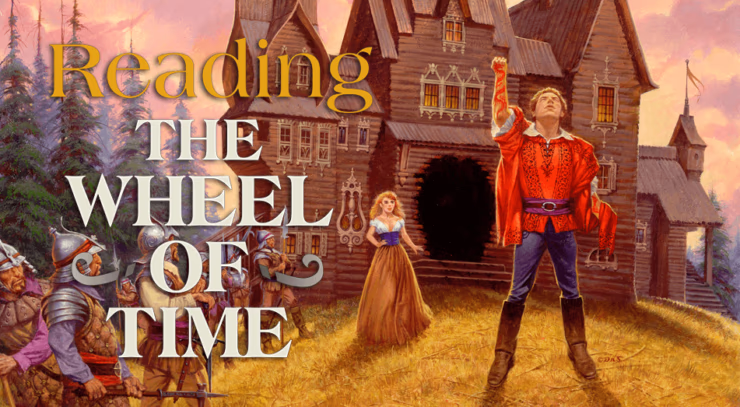
La crisis de Rand al'Thor: desesperanza o esperanza en Dragonmount?
La saga monumental de Tiempos de Turbulencia se acerca a su clímax, mientras Rand al'Thor se enfrenta a la carga de su destino. En la tormenta que se avecina, el Dragón Renacido se enfrenta a sus miedos más profundos, lo que lo obliga a tomar una decisión que determinará el destino del mundo.
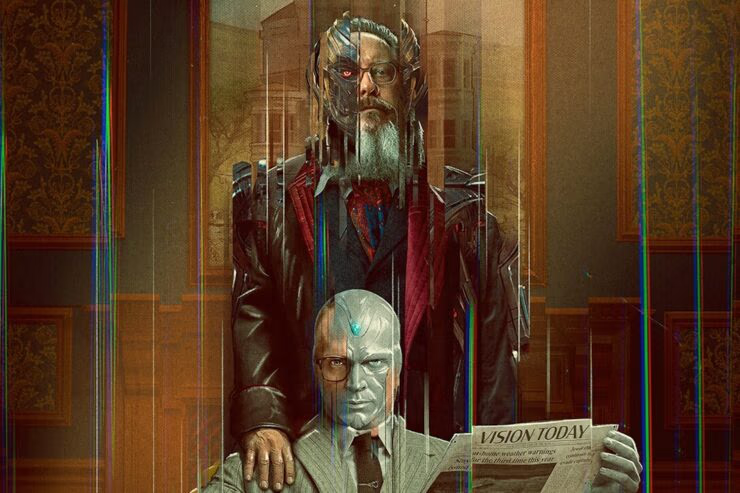
James Spader's Ultron Returns: More Mature, More Dangerous in VisionQuest
James Spader reveals a profoundly changed Ultron in Marvel's VisionQuest, shedding his teenage angst for a more developed and dangerous persona. This evolution is key to understanding the villain's surprising return.