 WeCult App

Atonement: How Boyd Holbrook Seeks Peace After War's Unspeakable Cost
Reed Van Dyk's powerful war drama, 'Atonement,' forces audiences to confront the devastating ripple effects of violence. Starring Boyd Holbrook and Hiam Abbass, the film explores the agonizing journey toward forgiveness in the wake of tragedy.
The Weight of a Trigger Pull
In Reed Van Dyk's unflinching drama “Atonement,” the shattering impact of a single, ill-fated decision unfolds with gut-wrenching clarity. Based on Dexter Filkins' poignant 2012 New Yorker article, the film eschews the typical bombast of war movies, opting instead for a deeply personal exploration of trauma and its lingering shadows. We first meet a family in Iraq, their lives a tapestry of ordinary moments woven with warmth and quiet dignity, captured beautifully on 16mm film by cinematographer Jon Peter. This extended period of peace makes the sudden, violent explosion that obliterates their world all the more visceral. It’s a testament to Van Dyk’s direction that when the film inevitably turns to the horrors of war, the audience feels not adrenaline, but a profound sense of lament for the lives irrevocably shattered.
The nightmare becomes a brutal reality for matriarch Mariam Khachaturian (played with immense depth by Hiam Abbass), who flees with her family only to witness her husband and children gunned down by a trigger-happy U.S. Marine, Lou D’Alessandro (a compelling Boyd Holbrook). Mistaken for insurgents, their deaths are a catastrophic error, a moment that will haunt Lou and his unit for years to come. Years later, grappling with the immense fallout of that day, Lou learns of a journalist, Michael Reid (portrayed by Kenneth Branagh), who has written about the killings, identifying Mariam and her daughter Nora (Gheed) as the sole survivors. This discovery sets Lou on a desperate path to seek absolution, to atone for his sins.
The Long Road to Forgiveness
“Atonement” distinguishes itself by refusing to let Mariam and her family exist merely as plot devices in Lou’s redemption arc. The film centers their experience, allowing us to feel the immeasurable weight of their loss and the deep scars, both mental and physical, that Mariam carries. Her journey is one of profound internal struggle: can she, or even will she, offer peace to the man who destroyed her world, even as she navigates her own fractured existence? This delicate dance between perpetrator and victim, between the desire for justice and the possibility of grace, forms the emotional core of the film. It asks difficult questions about accountability, the nature of forgiveness, and whether true atonement is ever truly attainable.
What's Next
Having premiered at the Directors’ Fortnight at the 2026 Cannes Film Festival and released on October 2, 2026, “Atonement” is now available for audiences to experience. The film’s powerful performances and its thoughtful, humanistic approach to a difficult subject matter are sure to spark conversation among viewers and critics alike.
This film masterfully reframes the war genre, shifting focus from battlefield spectacle to the profound, lasting human cost of conflict and the arduous path to reconciliation.



WeCult App
Track your films — all in one place
Follow releases, track progress, discover what matches your taste. Rate "Atonement: How Boyd Holbrook Seeks Peace…" on the app.
More Like This
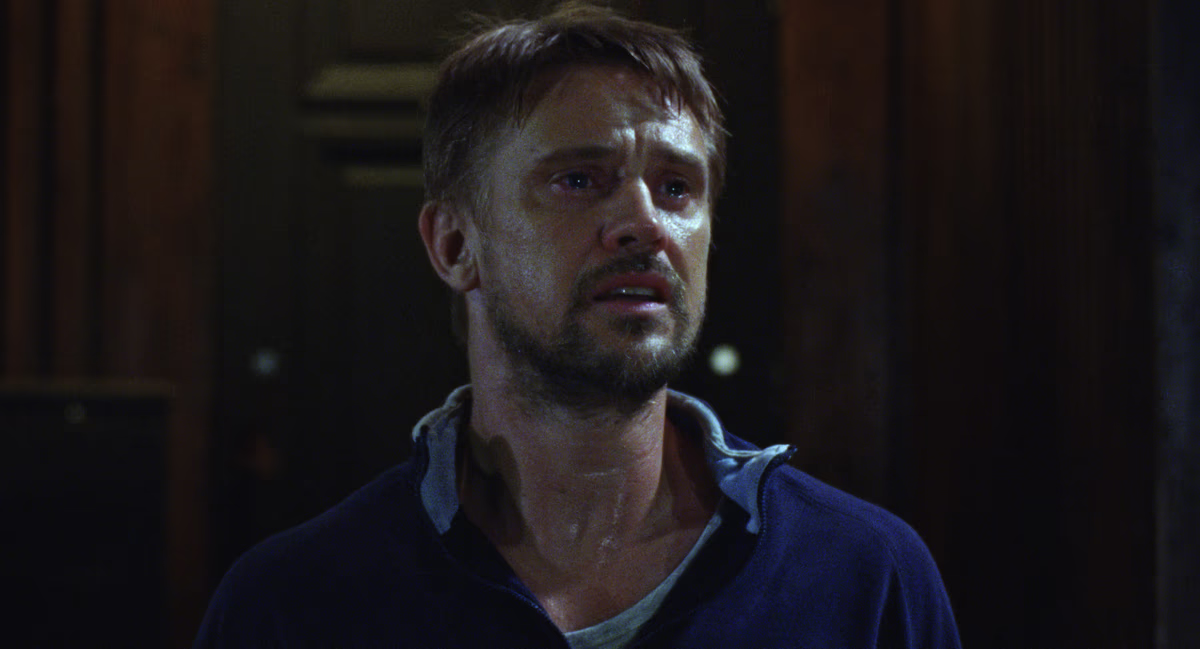
Boyd Holbrook's 'Atonement' Drops Trailer for Haunting War Guilt Drama
A first glimpse at Reed Van Dyk's intense war film 'Atonement' has arrived, showcasing a powerful story of combat guilt and loss. The film is set to premiere at the Toronto International Film Festival.

Mandalorian and Grogu: Hal Hickel on Rotta's Redesign & Favreau's 'Jackass' Approach
Animation supervisor Hal Hickel dives into the creature design for 'The Mandalorian and Grogu,' revealing the inspiration behind Rotta the Hutt's athletic build. He also touches on Jon Favreau's unique vision for bringing classic Star Wars elements to life.

Robert De Niro's Twisted Crime Thriller Finally Lands on Netflix
A gripping crime thriller featuring a legendary performance from Robert De Niro is now available for binge-watching. Dive into a world of abduction and dark secrets with this R-rated gem.