 WeCult App
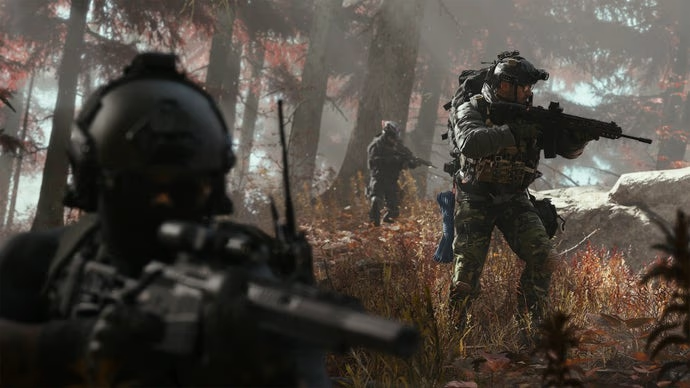
Cheating in Games is an $8.5 Billion Industry, Activision Reveals
Activision's anti-cheat team has dropped a bombshell, revealing that the shadowy world of game cheating has ballooned into an $8.5 billion global industry. This massive figure dwarfs many legitimate sectors of the gaming world and highlights a persistent challenge for developers and players alike.
The digital battleground of online multiplayer games is not just a space for competition and camaraderie; it's also a colossal economy for those who seek to break the rules. Activision, through its Call of Duty anti-cheat initiative, Team Ricochet, has brought to light startling data: the industry dedicated to cheating in video games is now estimated to be worth a staggering $8.5 billion. This figure is not just a number; it represents a complex network of underground businesses peddling exploits, hacks, and other illicit services that undermine fair play.
Research from security firm Intorqa positions this cheating economy as larger than projected global esports revenue for 2026, which stands at $5.1 billion, and even surpasses the value of streaming giant Twitch. First-person shooter and battle royale titles appear to be the primary targets, accounting for a massive 69% of this illicit market. For developers of these fast-paced games, cheat makers reportedly generate an average of $362 million per game. Meanwhile, the revenue for cheats in mobile games is estimated at $286 million per game, attracting a distinct set of malicious actors. Even massively multiplayer online (MMO) games are not immune, with cheat revenues projected to hit $98 million per game by 2026.
The High Cost of Dishonesty
The implications of this multi-billion dollar industry are profound for both game developers and the player base. Studios are forced to divert significant resources towards developing and maintaining robust anti-cheat systems, a constant arms race against those determined to exploit vulnerabilities. For players, the prevalence of cheaters can shatter the integrity of matches, leading to frustration and a diminished enjoyment of otherwise competitive experiences. The data suggests that a significant majority of online multiplayer studios, a substantial 69%, consider cheating to be a "significant or very significant problem," underscoring the widespread nature of this challenge and the ongoing efforts to combat it.
What This Means for Gamers
This revelation serves as a stark reminder of the unseen battles being fought within the games we love. While many players enjoy fair competition, the existence of such a lucrative cheating market means that studios will continue to prioritize security and integrity. For fans of Call of Duty, Apex Legends, Fortnite, and countless other online titles, this means ongoing updates and vigilance from developers like Activision to ensure a level playing field. The sheer scale of the cheating industry also points to the need for continued innovation in anti-cheat technology, as the stakes are clearly very high for everyone involved.
What's Next
As the gaming industry continues to grow, so too will the incentives for illicit activities. Players can expect developers to further invest in advanced detection methods and potentially explore new strategies to combat cheaters more effectively. The fight against this $8.5 billion industry is far from over, and its impact will continue to shape the future of online multiplayer gaming.
This deep dive into the economics of cheating reveals the sophisticated criminal enterprises operating within the gaming ecosystem, forcing studios like Activision to invest heavily in countermeasures.


WeCult App
Track your games — all in one place
Follow releases, track progress, discover what matches your taste. Rate "Cheating in Games is an $8.5 Billion Ind…" on the app.
Benzer Haberler
Modern Warfare 4 Powers Up with Samsung Odyssey G9 Partnership
Call of Duty and Samsung are joining forces for the upcoming Modern Warfare 4, promising an immersive visual experience. The partnership will put Samsung's premium Odyssey G9 monitor front and center for the game's global reveal.

Toys for Bob, Özgürlüğe Geri Dönüyor: Call of Duty'ün Getirdiği Yükten Kurtuldular
Toys for Bob, beloved oyun stüdyosunun, uzun süredir beklenen bir gelişme ile bağımsız bir şekilde çalışmaya geri döndüğü açıklandı. Bu gelişme, stüdyonun Call of Duty serileri için çalışmaya zorlandığı bir dönemin ardından geldi.

Call of Duty: Modern Warfare 4 Kore Ayarını Öne Sürüyor
Activision, gizemli bir videoyla Modern Warfare serisinin bir sonraki bölümünü öne sürdü. Hayranlar, serinin bir sonraki büyük çatışmasının Kore Yarımadası'nda geçebileceğini düşünüyor. Bu, serinin coğrafi olarak en farklı bölümü olabilir.