 WeCult App
Primetime: The Article That Sparked Robert Pattinson's Controversial Chris Hansen Film
Twenty years after its debut, the Esquire article that inspired the new film 'Primetime' is being re-examined. The movie delves into the complex legacy of Chris Hansen and his show 'To Catch a Predator,' sparking debate about its methods.
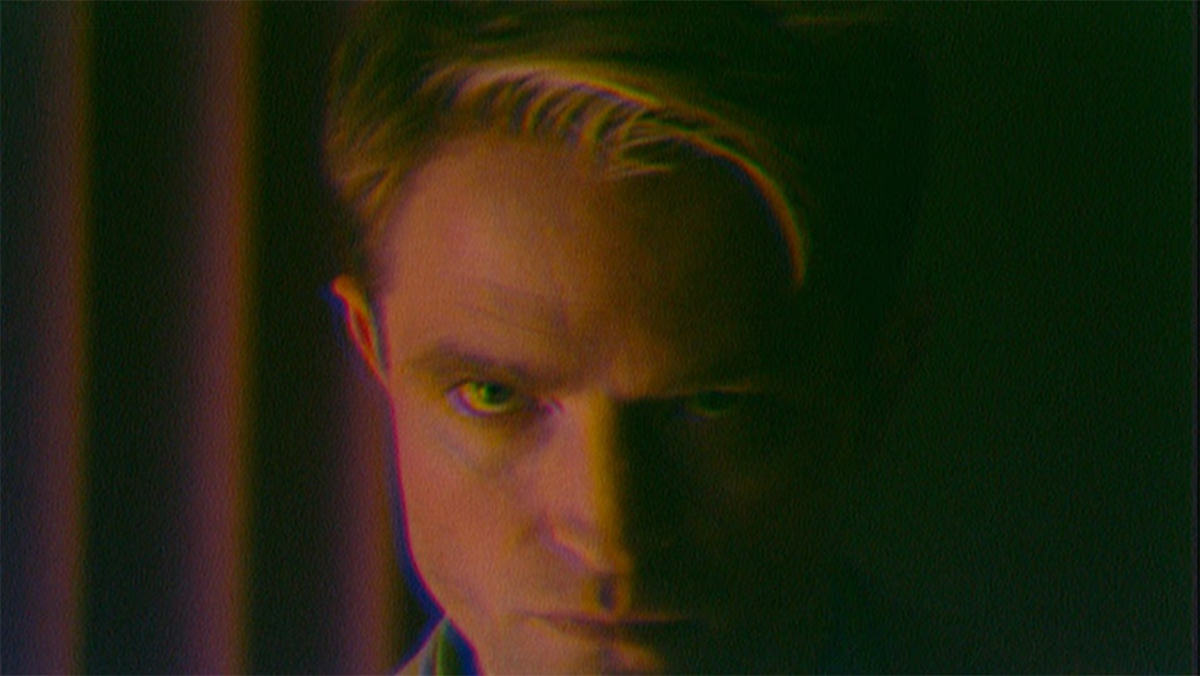
The year is 2026, and Hollywood is grappling with the complicated legacy of television's most infamous sting operations through the lens of the new film, Primetime. Starring Robert Pattinson as Chris Hansen, the movie dramatizes the era of 'To Catch a Predator,' a show that captivated and horrified audiences in equal measure. But before Pattinson donned Hansen's signature khakis, the entire phenomenon was dissected in a single, explosive article. That article, Luke Dittrich's 2009 piece for Esquire titled "Tonight on Dateline This Man Will Die," serves as the bedrock for Primetime's screenplay, penned by Ajon Singh.
Dittrich's original reporting delved deep into the world of Hansen and his groundbreaking, yet ethically murky, program. The article itself reportedly culminated in the real-life suicide of an assistant district attorney in Texas during one of the show's sting operations, a climax that has been adapted as the film's dramatic peak. Now, as the film hits screens, Dittrich himself has reflected on the piece and his evolving perspective over the past two decades. He's shared insights into visiting the set, witnessing his words brought to life, and contemplating the enduring impact of Hansen's methods on television and society.
The Lingering Questions of 'To Catch a Predator'
The film's very existence, and the renewed attention on Dittrich's article, forces a re-evaluation of 'To Catch a Predator.' While the show undeniably brought predators to justice and sparked crucial conversations about child safety, its confrontational tactics and the intense public shaming it facilitated have long been subjects of debate. Critics have scrutinized the show's ethical implications, questioning whether the ends justified the means. Chris Hansen himself has reportedly called the film "disrespectful," noting that he has yet to see it, adding another layer of controversy to the project. The film's narrative, rooted in Dittrich's investigative journalism, promises to explore these complexities, presenting a dramatized yet grounded look at a cultural moment that defined a generation's approach to online danger.
Fan Reactions and the Media's Role
For fans who grew up with 'To Catch a Predator' dominating 'primetime' television slots—even competing with juggernauts like ABC's Lost—the film Primetime offers a chance to revisit a formative, albeit disturbing, part of their viewing history. The discourse surrounding the film mirrors the ongoing debate about the media's power and responsibility. How do we balance the need for accountability with the potential for sensationalism? Dittrich's article and the subsequent film invite audiences to consider the long-term consequences of televised vigilantism and the evolving standards of journalistic and entertainment ethics. The passionate engagement from viewers, both online and in discussions about the film, underscores the lasting impact of 'To Catch a Predator' and the sensitive nature of its subject matter.
What's Next
As Primetime continues to generate buzz, audiences will be looking for further discussion on the film's portrayal of Chris Hansen and the show's controversial legacy. Details regarding wider streaming availability or potential follow-up pieces from the filmmakers are expected.
This film's exploration of a controversial TV show through the lens of its foundational article offers a fascinating case study in media ethics and evolving public perception.




WeCult App
Track your films — all in one place
Follow releases, track progress, discover what matches your taste. Rate "Primetime: The Article That Sparked Robe…" on the app.
Benzer Haberler
Wim Wenders' 3D Documentary Is an Architectural Marvel We Can Step Inside
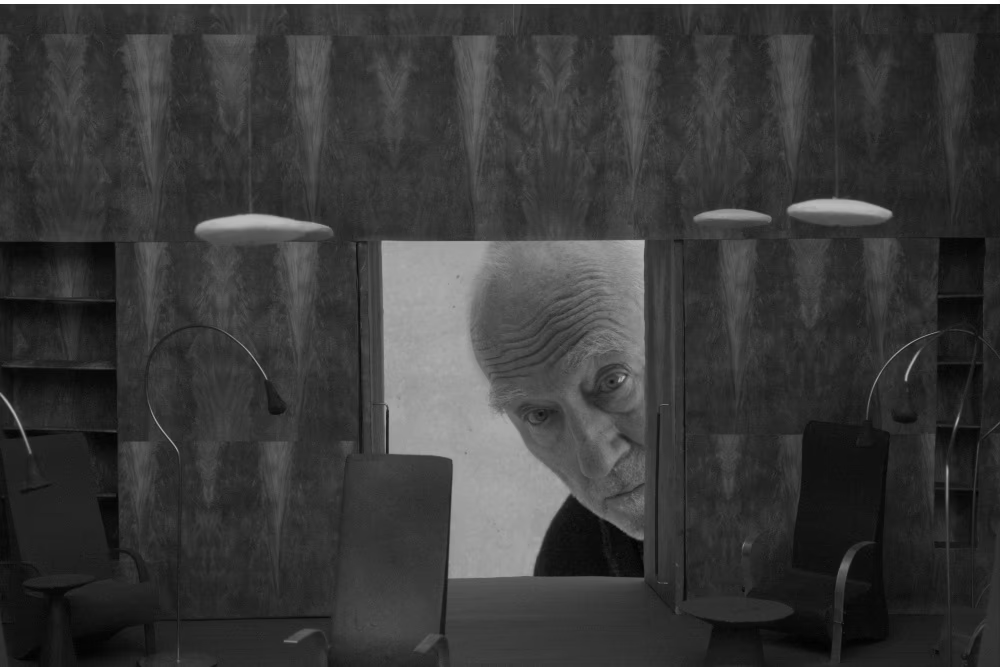
Wim Wenders' latest documentary, 'From Inside Out – The Architecture of Peter Zumthor,' transforms the screen into a window, inviting viewers into the world of a renowned architect. While occasionally dense, the film is a visually stunning exploration of space and design.

Öfkenin Dansı: The Furious'un Çılgın Dövüş Sahnelerinin İçinde
Müthiş bir dövüş sanatları gösterisi için hazırlanın, 'The Furious' uzmanca koreograflanmış aksiyonun seliyle geliyor. Bu Hong Kong epik film, bir babanın kaçırılan kızı için olan amansız arayışını anlatıyor, ancak gerçek yıldızlar dövüş koreografisidir.

GTA 6'nin Shadowsı: Summer Game Fest, Rockstar'ın Blockbusteri için Bekliyor
Gaming dünyası, Summer Game Fest'ten çıkan açıklamalarla birlikte, bir unvanın gölgesinde. Grand Theft Auto VI'nin yokluğu, beklenen büyükbaşının gölgesinde kaldı. İndirgeme olmaktan ziyade, Rockstar'ın magnum opus'u, Geoff Keighley'nin sergisi dışında kaldı, ancak beklenen büyükbaşının varlığı, stüdyoların büyük başları planlamalarında etkili oldu.