 WeCult App
Nolan's Odyssey: Homer Experts Reveal What's Truly Missing
Christopher Nolan's take on Homer's epic is a cinematic spectacle, but what do scholars of the original tales make of it? Experts weigh in on the timeless nature of the Odyssey and its endless reinterpretations.
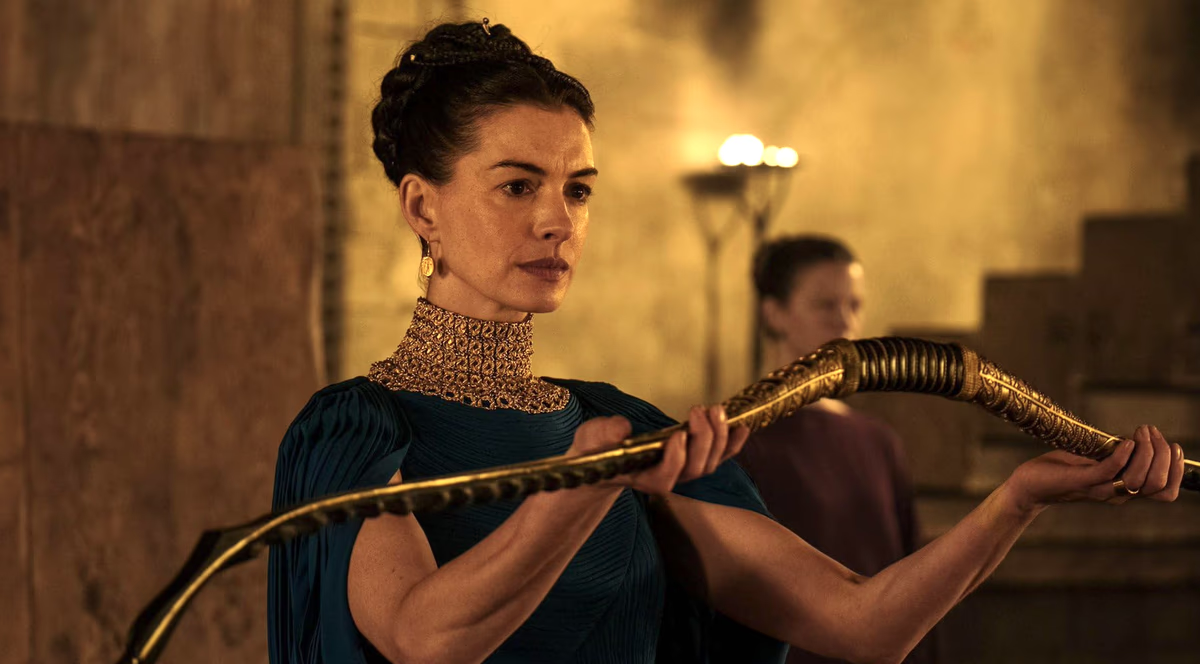
Christopher Nolan’s ambitious vision for The Odyssey has landed, and it’s a cinematic event. Yet, for those steeped in the millennia-old verses of Homer, the experience of watching a modern interpretation unfold, especially on the grand scale of IMAX 70mm, presents a unique challenge. Dr. Emily Hauser, a respected Classics lecturer from the University of Exeter and a devoted scholar of Homeric epics, attended the premiere alongside Tristan Hughes, host of The Ancients podcast. While acknowledging the breathtaking spectacle, Hauser found herself reminding her “Homerist heart” of a crucial truth: the Odyssey has never been a static text.
From its very origins as an oral tradition, long before it was committed to papyrus around the 7th century BCE, the tale of Odysseus’s arduous journey home was fluid and adaptable. “Every single reworking of The Odyssey is going to be speaking to its particular format, its particular audience, and its particular moment,” Hauser explains. This inherent mutability is precisely what has allowed the story to survive and resonate across thousands of years. The idea that Homer’s original composition is a fixed, definitive version is, according to Hauser, a misunderstanding of the epic’s deep roots in performance and variation. Nolan's film, like countless retellings before it, is simply the latest iteration in a long line of interpretations, each shaped by its time.
The Enduring Power of Interpretation
Hauser and Hughes, collaborators on The Ancients podcast, found themselves in esteemed company at the premiere, witnessing Nolan’s work firsthand. Their presence signifies a growing interest in bridging the gap between academic study and popular entertainment. The very nature of epic poetry, particularly the Homeric tradition, thrived on reinterpretation. Bards would adapt stories, weave in local color, and tailor narratives to engage their immediate audiences. This process of adaptation and reinvention wasn’t a deviation from the original intent; it was the intent. The survival of The Odyssey for over two millennia is a testament to this very flexibility, proving that its transmutability is its greatest strength.
What This Means for Fans
For devoted fans of The Odyssey, whether they approach it through academic texts or modern adaptations like Nolan’s, this perspective is vital. It reframes the conversation from one of faithfulness to a singular text to an appreciation of a living, evolving narrative. It encourages viewers to see Nolan’s film not as a replacement for, or even a direct translation of, Homer’s work, but as a new chapter in an ongoing story. This understanding allows for a richer engagement with both the ancient source and its contemporary manifestations, celebrating the enduring human impulse to retell and reimagine foundational myths.
Looking Ahead
While details on any potential follow-up or further engagement with Homeric themes by Nolan remain undisclosed, the conversation sparked by this film is far from over. Scholars and fans alike will undoubtedly continue to dissect and discuss how this legendary tale is reshaped for new generations.
This piece delves into the fascinating intersection of ancient epic and modern blockbuster filmmaking, offering a unique perspective on adaptation for both classicists and casual viewers.

WeCult App
Track your films — all in one place
Follow releases, track progress, discover what matches your taste. Rate "Nolan's Odyssey: Homer Experts Reveal Wh…" on the app.
Benzer Haberler
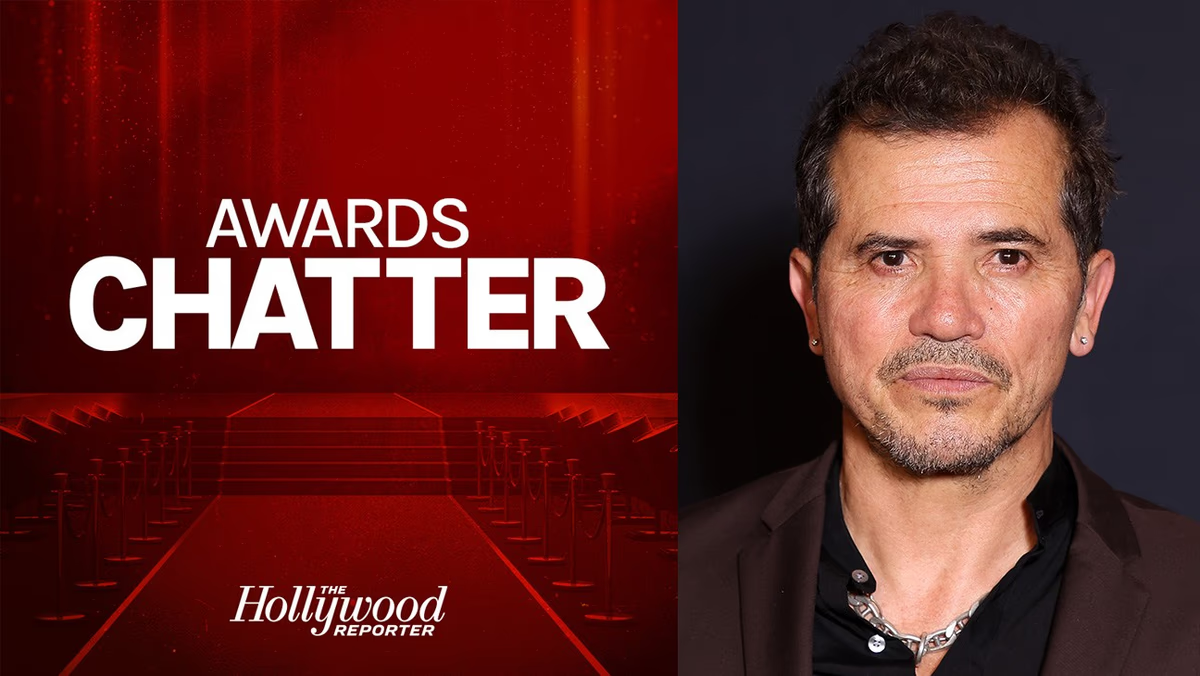
John Leguizamo on 'The Odyssey,' Blind Roles, and a Spider-Man Snub
The prolific actor John Leguizamo opens up about his transformative role in 'The Odyssey' and a surprising exclusion from a major superhero film. His candid discussion sheds light on non-traditional casting and Hollywood's complex landscape.
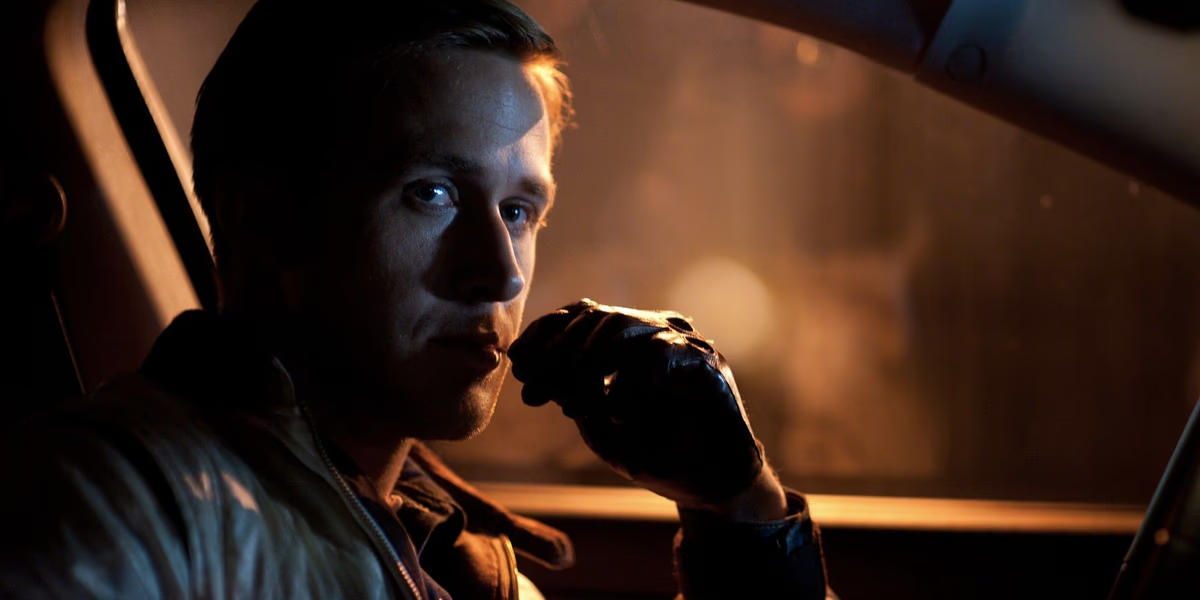
10 Movie Openings That Hit Harder Than A Ton Of Bricks
Forget the first act, these iconic movie beginnings immediately grab you and refuse to let go. Prepare for pure cinematic adrenaline.

Charlize Theron: 'The Odyssey' Reminds Hollywood of Epic Magic
Charlize Theron believes Christopher Nolan's latest epic, 'The Odyssey,' has delivered a vital message to Hollywood. The blockbuster is proving the enduring power of grand-scale storytelling.