 WeCult App
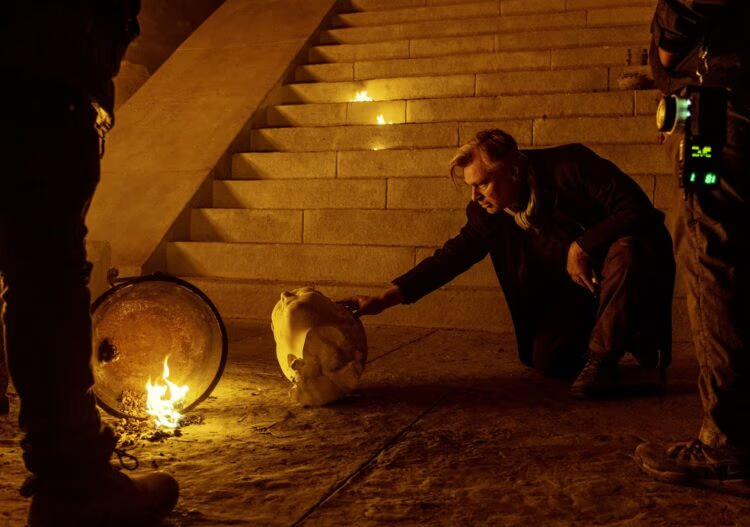
Christopher Nolan Links Oppenheimer's Success to His Vision for The Odyssey
Christopher Nolan reveals a surprising connection between his historical epic Oppenheimer and his ambitious adaptation of Homer's The Odyssey. The director credits the former's success for paving the way for the latter.
Christopher Nolan, a filmmaker renowned for his intricate narratives and grand cinematic scope, has drawn a compelling parallel between his recent blockbuster Oppenheimer and his upcoming adaptation of Homer's epic poem, The Odyssey. Speaking during a press tour in Beijing, Nolan elaborated on how the critical and commercial triumph of Oppenheimer was instrumental in making The Odyssey a reality, suggesting a shared philosophical undercurrent binds these seemingly disparate projects.
A Shared Vision Across Eras
Nolan's adaptation of The Odyssey is not merely a literal retelling but a profound exploration of themes that resonate deeply with Oppenheimer. Both narratives grapple with the fragility of civilization and the heavy burden of consequences stemming from pivotal historical actions. Nolan highlighted the vast historical distance between the events Homer describes and their transcription, a gap of roughly 400 years. He finds this temporal chasm particularly interesting, noting that Homer was writing about an era his audience perceived as more advanced, a civilization striving to reclaim a glorious past. This concept of cyclical history, of a society at its twilight looking back to a golden age, is a core idea that Nolan sees reflected in the cautionary tale of Oppenheimer.
"The main point is this 400-year-or-so gap between the events that Homer is describing and when Homer’s story was written down or first received by audiences. That’s a pretty interesting gap. For me, I don’t think I’m completely at odds with the way Homer is telling the story when you look at it from a historical perspective. The reason is—and what I became interested in as I adapted it—is that Homer is writing about an era hundreds of years earlier that his audience viewed as being more advanced than theirs. So, while they were a civilization on the rise, they were trying to get back to where they had been 400 years before."
This fascination with the ebb and flow of civilizations, the rise and fall, the echoes of past glories and future regrets, forms a crucial link between Oppenheimer and The Odyssey. Both protagonists, in their own ways, are left to contend with the profound, often haunting, ramifications of their wartime actions, leaving audiences to ponder the enduring impact of human choices.
The Impact of Critical Discourse
Beyond the thematic connections, Nolan also touched upon the often-contentious landscape of film criticism. In his interview with political philosophy lecturer Zhong Shu, Nolan expressed thoughts on the perceived flaws within the critical establishment. While the specifics of his critique remain nuanced, it suggests a director who is both engaged with and occasionally frustrated by how films, particularly those dealing with complex historical or philosophical ideas, are dissected and debated. This introspection adds another layer to his approach, indicating a desire for deeper engagement with the material beyond surface-level analysis.
What's Next
While details regarding the release of Nolan's The Odyssey remain under wraps, the success of Oppenheimer has undoubtedly emboldened the director to pursue ambitious projects. Fans will be eager to see how Nolan’s signature style and thematic depth translate to the timeless world of Homer's epic.
Nolan's deep dive into the thematic parallels between Oppenheimer and The Odyssey offers a fascinating glimpse into his directorial philosophy, exploring cycles of civilization and the enduring consequences of human action across millennia.




WeCult App
Track your films — all in one place
Follow releases, track progress, discover what matches your taste. Rate "Christopher Nolan Links Oppenheimer's Su…" on the app.
Benzer Haberler
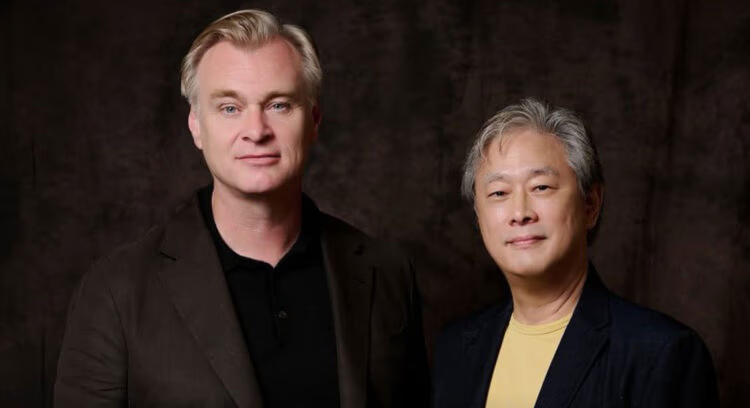
Nolan and Park Chan-wook Unpack The Odyssey's Magic and Myth
Two visionary directors, Christopher Nolan and Park Chan-wook, recently sat down for a captivating conversation about Nolan's blockbuster hit, 'The Odyssey.' They delved into the film's unique storytelling, bold techniques, and the enduring power of epic narratives.

Christopher Nolan'ın 'The Odyssey'si' Göz Kamaştırıyor: Hollywood'un En İyi Yönetmeninin Epic Ölçeği Nasıl Yönettiği
Christopher Nolan, son filmi 'The Odyssey' ile Hollywood'un en önemli yönetmeni olduğunu kanıtladı. Film, devasa bir bütçe ile çekilmiş ve gişede rekor kırmıştır. Nolan'ın bu filmi, büyük bir başarı elde etmiş ve yönetmenin sanatını bir kez daha kanıtlamıştır.
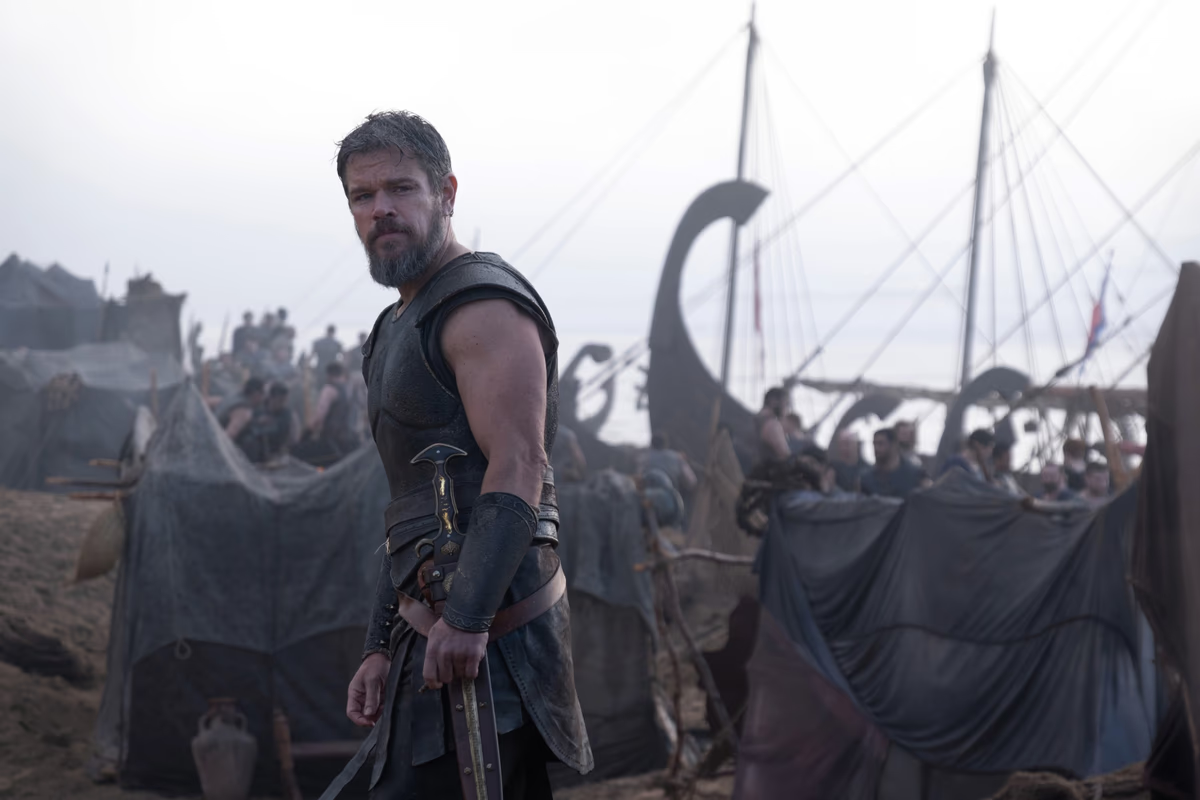
Christopher Nolan'ın 'The Odyssey'ini IMAX 70mm'de İzlemek İçin Epic Bir Yolculuk
Christopher Nolan'ın son filmi 'The Odyssey', IMAX 70mm formatında sinemaseverleri bir araya getirdi. Filmin prömiyeri, sinemayı sevenler için eşsiz bir deneyim sunuyor.