 WeCult App
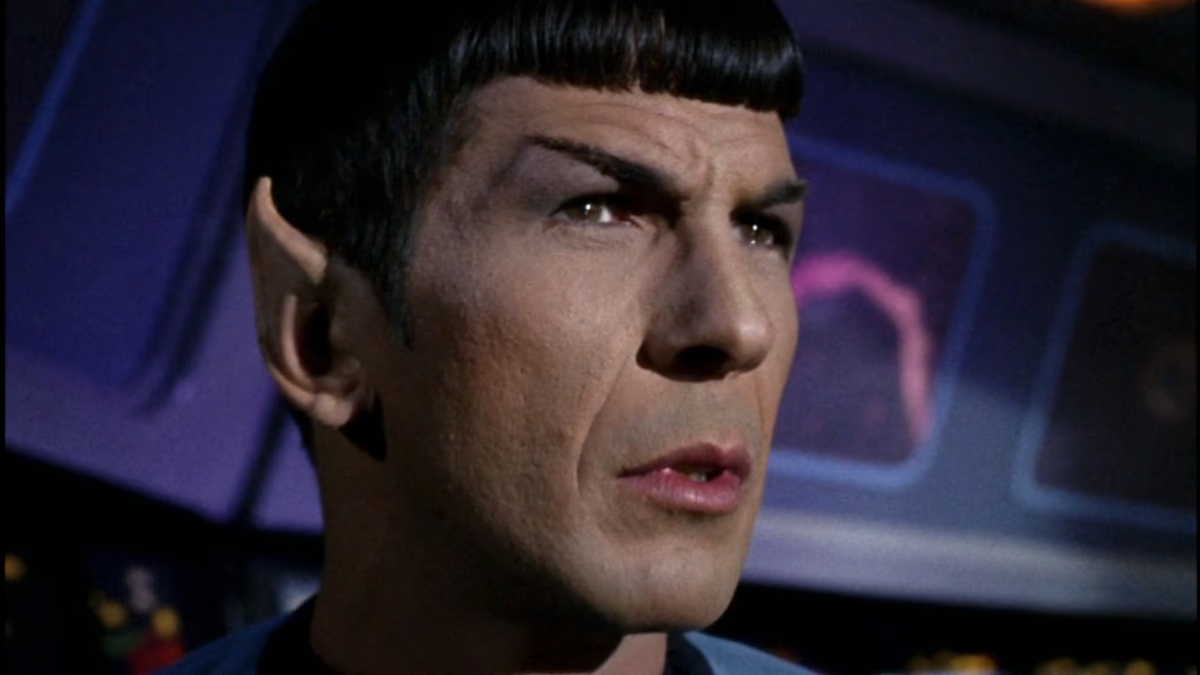
Star Trek's Smartest In-Universe Secret: Why Aliens Look So Human
For decades, Star Trek has featured aliens that look remarkably like humans. Now, the in-universe explanation behind this consistent design choice is incredibly elegant and simplifies countless interstellar encounters.
It's a question that has puzzled fans and creators alike since the dawn of Star Trek: why do so many alien species across the galaxy share a striking resemblance to humans? From the stoic Vulcans to the enigmatic Romulans and the formidable Klingons, the visual consistency has been a hallmark of the franchise. While practical considerations in early television production certainly played a role, the series eventually developed an in-universe explanation that is both clever and satisfying for dedicated viewers.
The most widely accepted and canonical reason, particularly emphasized in later series like Star Trek: The Next Generation, points to an ancient, progenitor species. This advanced, long-vanished civilization is believed to have traveled the cosmos eons ago, seeding the primordial oceans of countless worlds with their own genetic material. The implication is that this genetic blueprint, spread across thousands of planets, guided the evolutionary path of life, making the development of humanoid forms not just a possibility, but a near certainty.
This concept elegantly sidesteps the need for elaborate, often costly, and narratively complex alien designs for every new species encountered. It allows the writers to focus on the cultural, philosophical, and interpersonal dynamics between characters, rather than getting bogged down in explaining radically different biologies for every alien of the week. Gene Roddenberry and Robert Justman, the show's original architects, also outlined a practical approach where Starfleet vessels would often seek out planets capable of sustaining human life, further simplifying the logistical challenges of exploration and interaction. This foundational element of the Star Trek universe ensures that while aliens may differ in customs and appearance, their fundamental compatibility for storytelling remains intact.
The Fan Factor
The progenitor race theory has become a beloved piece of Star Trek lore for many fans. It provides a sense of cosmic interconnectedness and a grand, ancient history that underpins the entire franchise. For binge-watchers and series fans, this explanation adds a layer of depth to their viewing experience, transforming what could be seen as a production shortcut into a deliberate, universe-spanning narrative element. It fuels discussions across forums and social media, with fans appreciating how a seemingly simple visual choice is rooted in a profound, ancient galactic event. The elegance of this solution allows for immediate connection with new species, making the vastness of space feel a little more familiar and the stories of diplomacy and conflict resonate more deeply.
What's Next
With Star Trek: Discovery continuing its final season and Star Trek: Strange New Worlds preparing for its highly anticipated third season, the exploration of diverse cultures and species remains central. Fans can expect new alien encounters, each likely to benefit from this established narrative foundation, allowing for immediate engagement with their unique stories and challenges within the Star Trek universe.
This analysis delves into a foundational concept of Star Trek's world-building, appealing to fans who appreciate the lore and the narrative convenience of humanoid aliens.




WeCult App
Track your series — all in one place
Follow releases, track progress, discover what matches your taste. Rate "Star Trek's Smartest In-Universe Secret:…" on the app.
Benzer Haberler
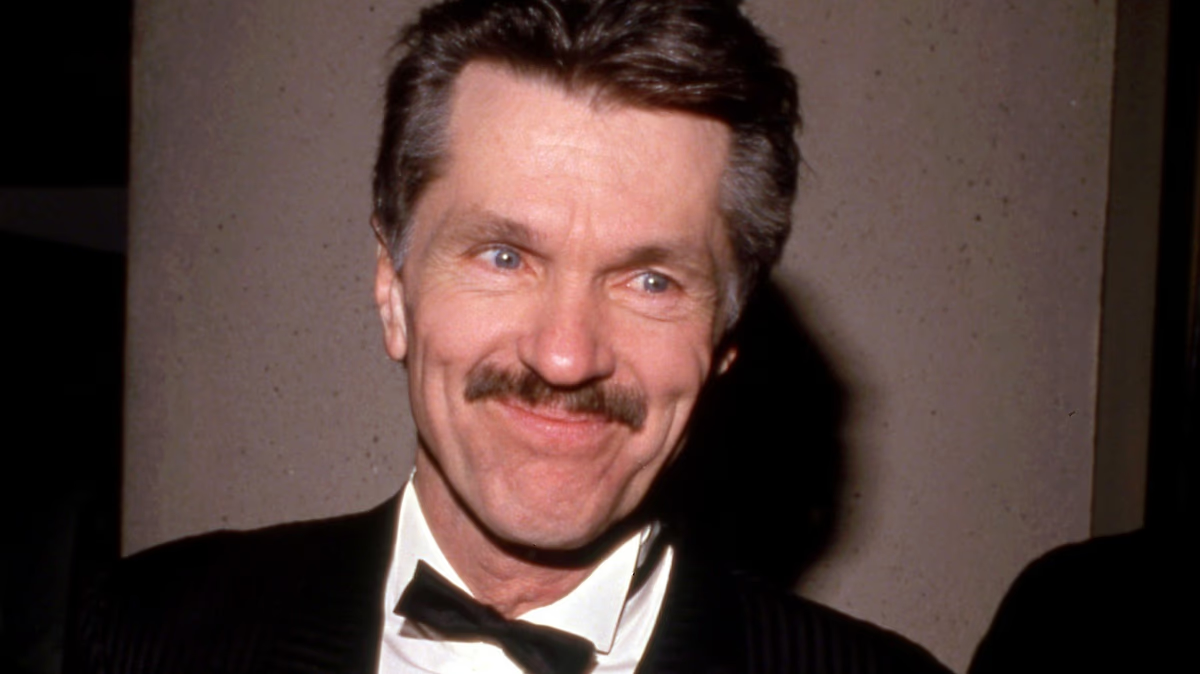
Tom Skerritt, Picket Fences Star, Dies at 93
The entertainment world mourns the loss of veteran actor Tom Skerritt, who passed away at 93. Known for iconic roles in "Picket Fences," "Top Gun," and "Alien," Skerritt leaves behind a monumental legacy.
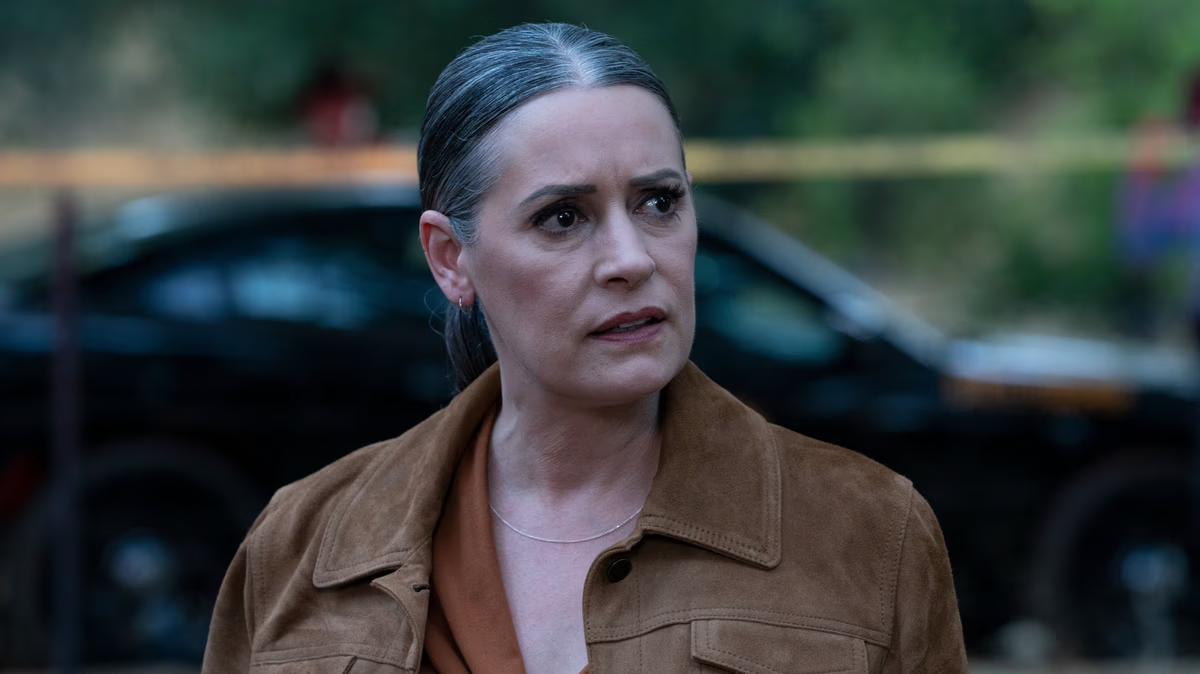
Criminal Minds Star Paget Brewster Finally Gives Voice to Obscure Disney Character
Paget Brewster, known for her intense role on Criminal Minds, has lent her voice to a surprisingly significant, yet long-overlooked, Disney character. This marks a major moment for a figure previously confined to animation's footnotes.
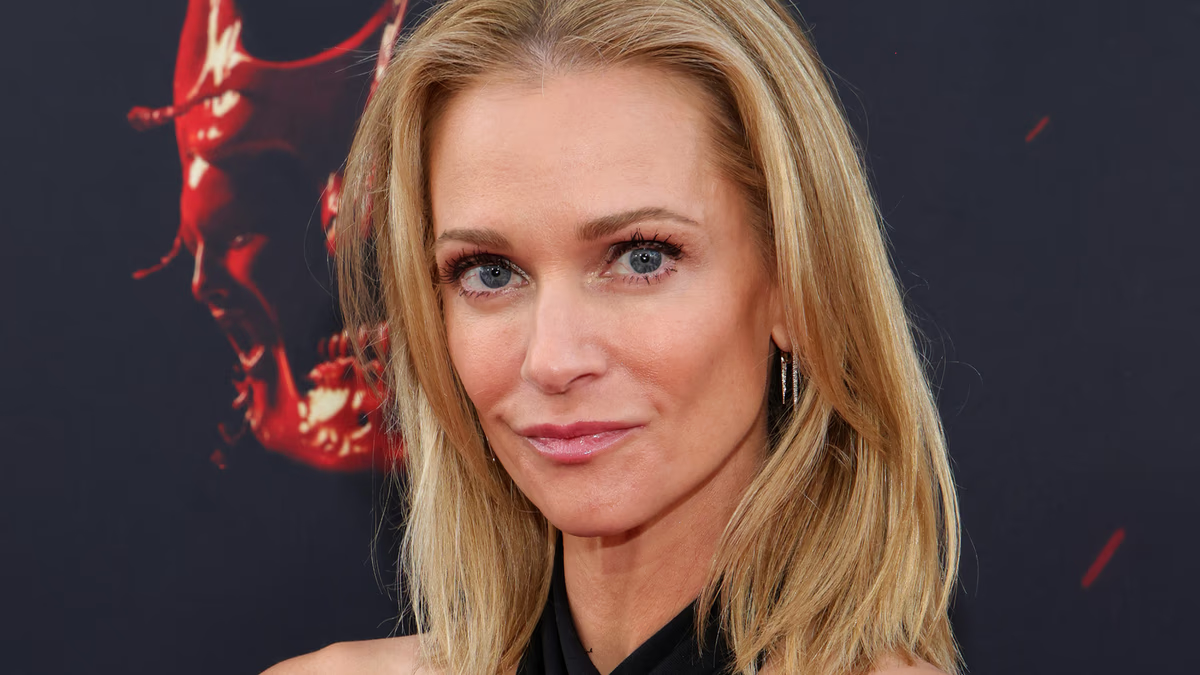
A.J. Cook's Surprising Early Role Alongside Star Wars' Hayden Christensen
Before becoming a fan-favorite BAU agent, A.J. Cook starred in a drama series that featured a young Hayden Christensen. Their characters navigated complex themes of addiction and trauma.