 WeCult App
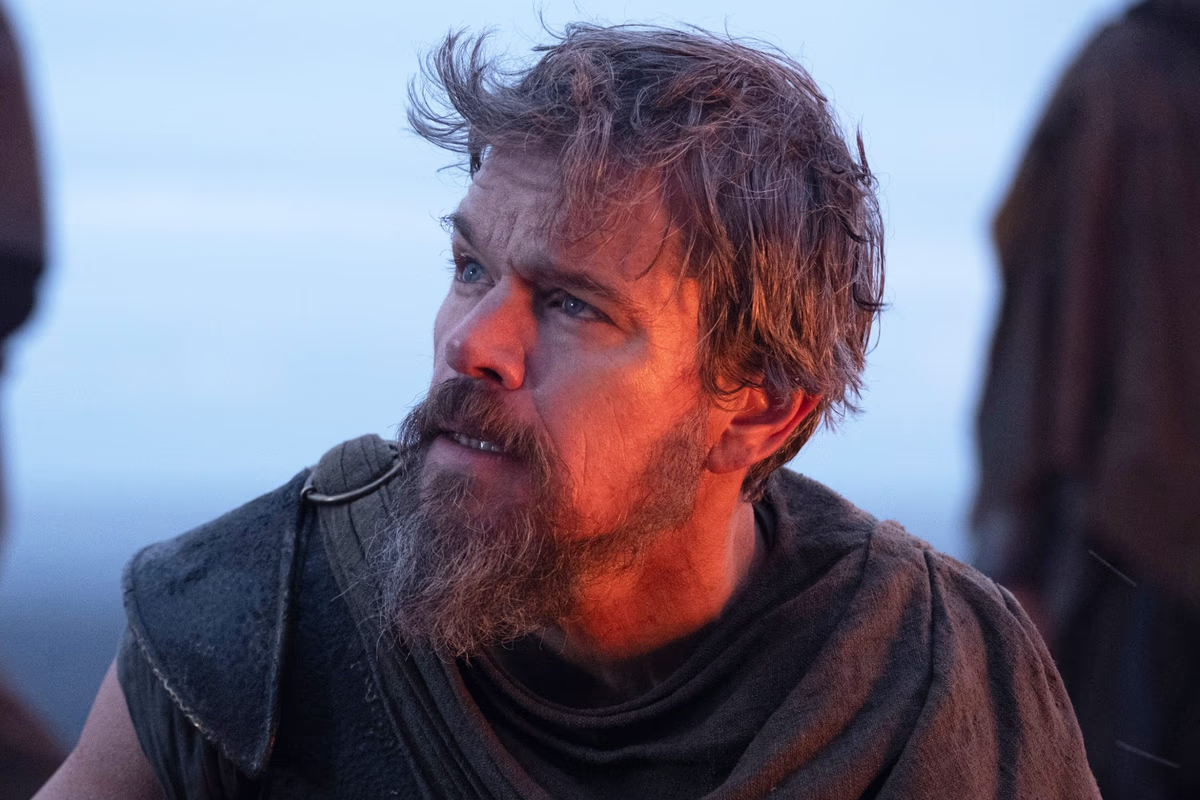
Odyssey Translator Emily Wilson Slams Nolan's Film as 'Emotionally Empty'
Acclaimed translator Emily Wilson, whose work influenced Christopher Nolan's latest film, has voiced strong criticism of the movie's depth and artistic merit. Her critique highlights a perceived disconnect between the epic poem's core themes and the film's execution.
A Translator's Verdict on Nolan's Odyssey
Emily Wilson, the celebrated translator of Homer's The Odyssey, has not held back in her assessment of Christopher Nolan's cinematic take on the epic journey. While Nolan himself cited Wilson's influential 2017 translation as a touchstone for his film, Wilson's recent op-ed in The Atlantic paints a starkly different picture of its artistic success. She contends that the film is fundamentally "emotionally empty," a far cry from the rich tapestry of the original poem.
Wilson's critique cuts deep, arguing that Nolan's adaptation misses many of the crucial elements that define Homer's work. She points out a lack of convincing commentary on profound themes such as time, memory, history, and the devastating realities of war. Furthermore, she feels the film fails to adequately explore the ripple effects of a warrior's return on his family, community, and adversaries. "Its narrative structure is gimmicky. The writing is abysmal. None of the characters has convincing motivation for their actions or words," Wilson stated, highlighting a perceived superficiality in both the plot and character development.
"Nolan’s ‘Odyssey’ lacks many of the elements that make the poem great. It has nothing convincing to say about time, memory, history, war, or about the relationship between one warrior’s glorious return and the lives of his family, adversaries, comrades, friends and neighbors. It lacks psychological, emotional, political and ethical depth. Its narrative structure is gimmicky. The writing is abysmal. None of the characters has convincing motivation for their actions or words."
Wilson also takes issue with the film's portrayal of violence. She argues that the movie presents Odysseus as a "reluctant warlord" in a way that undermines its own narrative logic. Crucially, she believes the film doesn't effectively convey the inherent wrongness of war or killing, instead suggesting only that "good men sometimes feel bad about it." She emphasizes that any meaningful depiction of violence, whether ancient or modern, must incorporate the perspectives of both victims and perpetrators, a dimension she feels is present in Homer's poems but absent in Nolan's film.
The Debate: Authenticity vs. Spectacle
This vocal criticism from Emily Wilson ignites a vital conversation within the fan community and among cinephiles about the nature of adaptation. For many who cherish The Odyssey for its profound exploration of the human condition, Wilson's words resonate. They raise questions about whether blockbuster filmmaking, driven by commercial imperatives, can truly capture the nuanced ethical and emotional complexities of classic literature. The debate centers on the balance between artistic integrity and the demands of mass entertainment, prompting fans to reconsider what they expect from adaptations of beloved source material.
What's Next
While Christopher Nolan has not directly responded to Emily Wilson's latest comments, this ongoing discourse ensures The Odyssey remains a topic of fervent discussion. Fans are encouraged to revisit both Homer's original poem and Nolan's film, perhaps with Wilson's insightful critique in mind, to form their own conclusions.
This critique from a renowned literary scholar offers a fascinating counterpoint to the blockbuster spectacle, prompting a deeper discussion about fidelity and artistic interpretation in adaptation.

WeCult App
Track your films — all in one place
Follow releases, track progress, discover what matches your taste. Rate "Odyssey Translator Emily Wilson Slams No…" on the app.
Artículos Relacionados
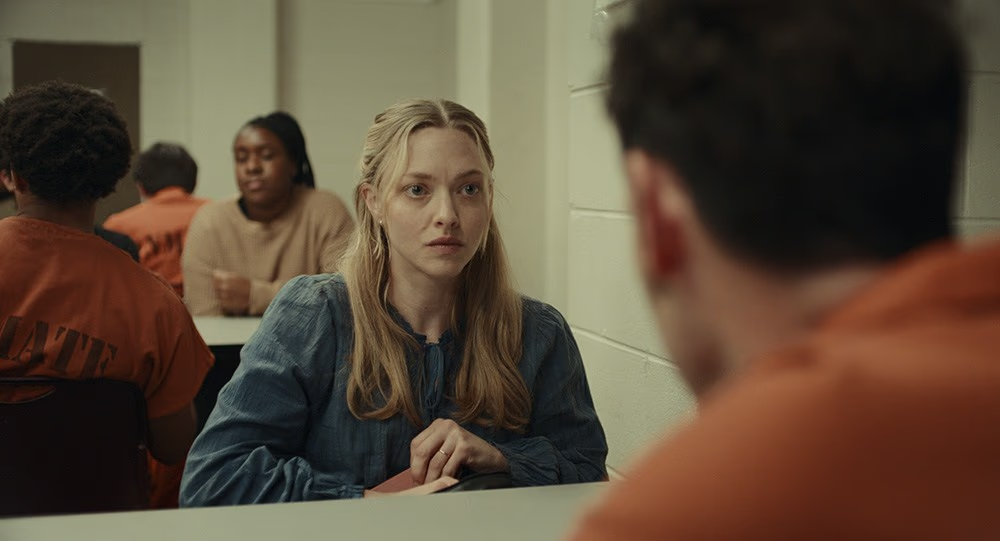
Seyfried, McNairy Ignite Tim Blake Nelson's Death Row Drama 'Wilson Shedd'
Amanda Seyfried and Scoot McNairy deliver raw intensity in Tim Blake Nelson's latest directorial effort, 'The Life and Deaths of Wilson Shedd.' The prison drama, which premiered at TIFF 2026, is drawing significant praise for its powerful performances.
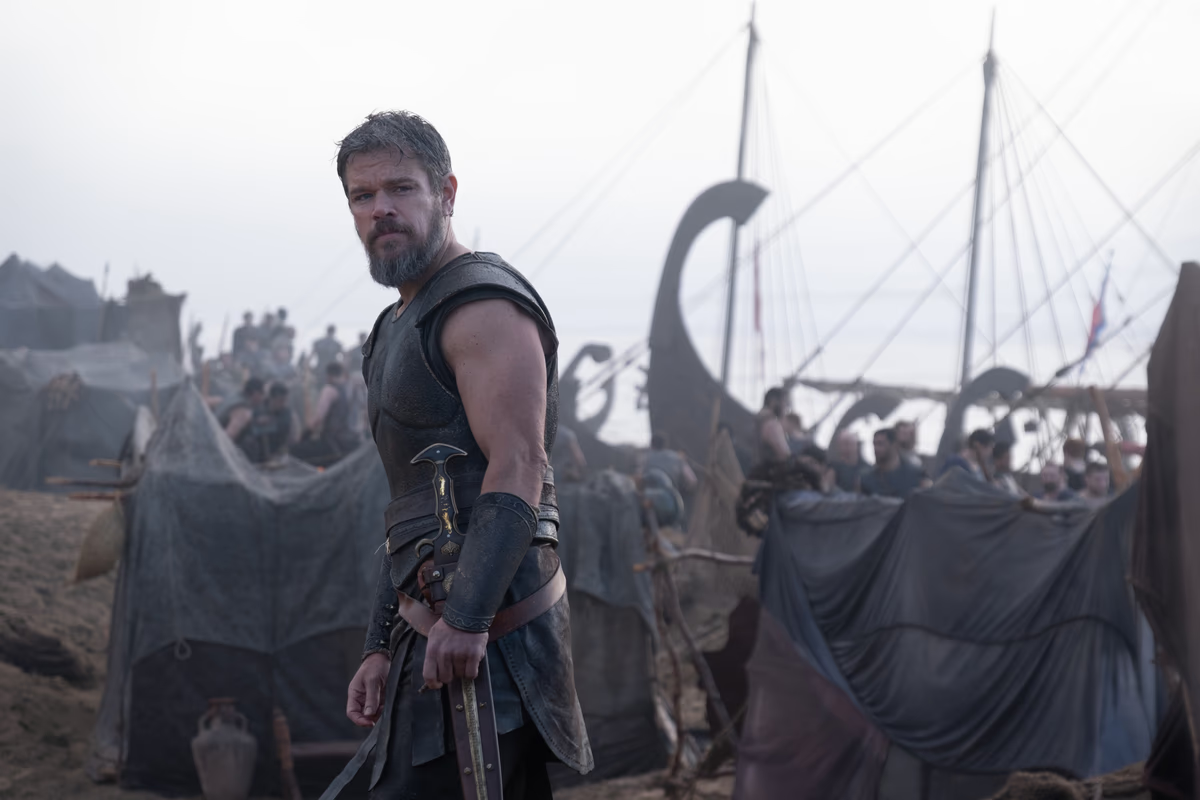
The Odyssey' Claims 6th Week at Korea Box Office Summit
Christopher Nolan's epic continues its reign atop the South Korean box office, defying expectations for a sixth consecutive weekend. Meanwhile, a new contender, 'Project Hail Mary,' makes a significant jump in the rankings.
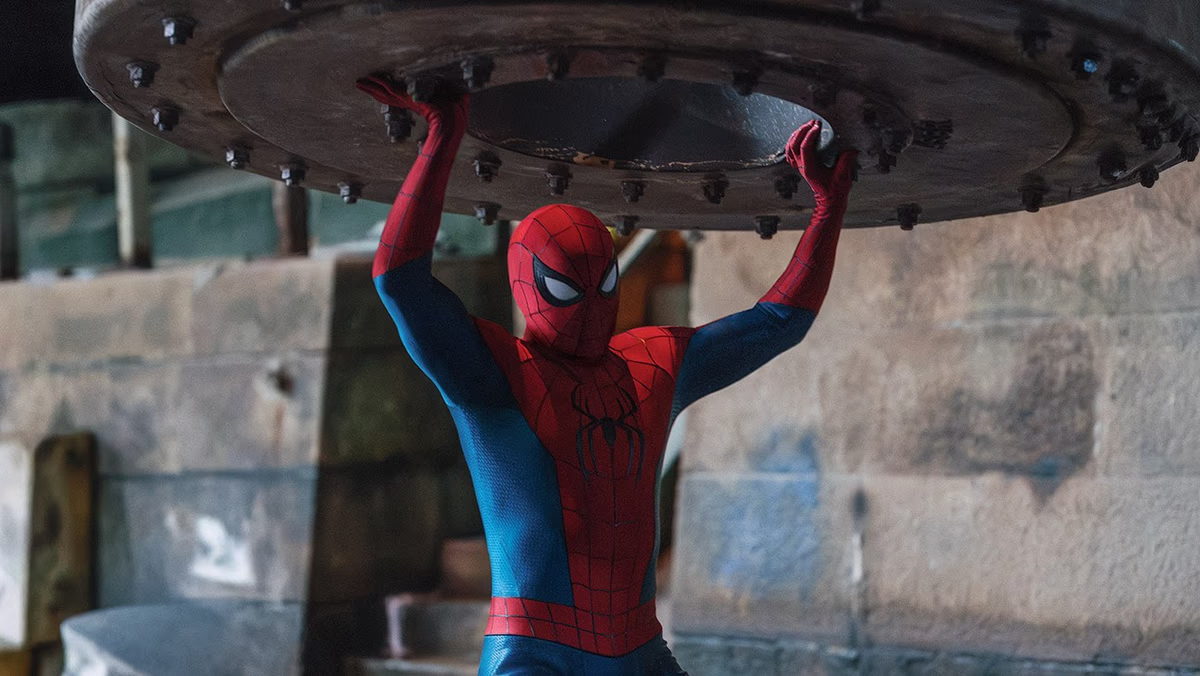
Spider-Man Dominates Labor Day Box Office, Nears All-Time Domestic Record
As summer winds down, 'Spider-Man: Brand New Day' continues its reign atop the box office, aiming for a historic domestic run. Tom Holland's other major film, 'The Odyssey,' also makes a strong showing, securing the second spot.