 WeCult App
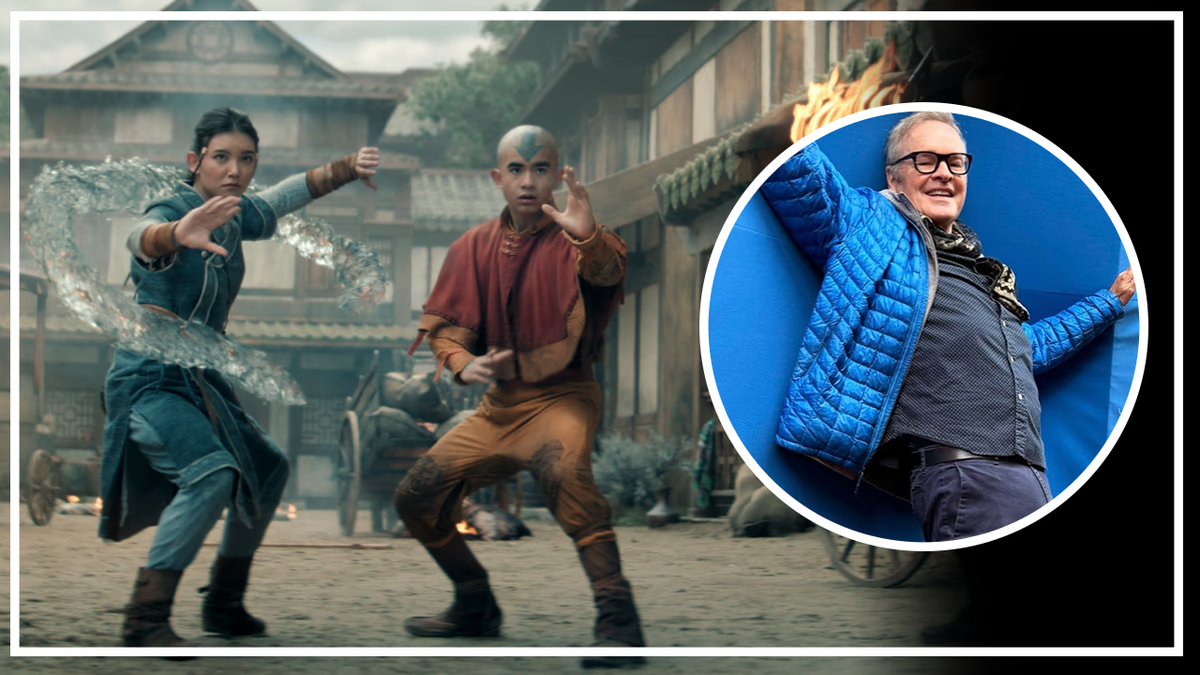
Avatar: The Last Airbender Costume Designer Unpacks Season 2 & 3 Secrets
Christopher Hargadon, the visionary behind the costumes for Netflix's live-action Avatar: The Last Airbender, delves into the intricate process of building worlds and characters for Seasons 2 and 3. His work aims to deepen the cultural tapestry of the beloved franchise.
Netflix's ambitious live-action adaptation of Avatar: The Last Airbender is more than just a faithful retelling; it's a deep dive into the cultural fabric of its fantastical world. Costume designer Christopher Hargadon, who lent his talents to both the recently released Season 2 and the upcoming Season 3, spoke with What's on Netflix about his meticulous approach to bringing the series to life. His primary directive for the show's attire? "Texture, silhouette, and colour." This focus ensures that even the most familiar characters feel grounded and possess a tangible history.
Hargadon emphasized the delicate balance of honoring the original animated series' iconic designs while infusing them with new depth. "You have to be aware of the fanbase, because you don't want to mess it up and have people angry at you," he explained. "I always tried to respect the original concepts and sketches, but you do want more depth and texture." This philosophy is evident in the way he and his team craft costumes that not only look visually striking but also tell a story, hinting at the wear and tear of a long journey and the unique cultural heritage of each nation within the Avatar universe. He also expressed his honor in working with a predominantly Asian and Indigenous cast, a significant step in representation for fantasy productions.
Crafting a World of Detail
The task of designing costumes for a world as rich and diverse as Avatar: The Last Airbender involves more than just aesthetics. Hargadon’s work on Seasons 2 and 3 aimed to expand the visual narrative, introducing new characters and presenting established heroes like Aang, Katara, and Sokka in ways that reflect their evolving journeys and the world around them. The goal was to make the fantasy feel tangible, grounding the magical elements in believable cultural contexts. This detailed approach ensures that the series resonates with long-time fans while attracting new viewers with its compelling visual storytelling. The series premiered in 2026, with Hargadon credited for 14 episodes across that year.
The Fan Connection
For the passionate global fanbase of Avatar: The Last Airbender, the costume design is a critical element in the show's success. Fans appreciate when adaptations show reverence for the source material while still offering creative interpretations. Hargadon's commitment to adding "more history and personality" to the live-action appearances, coupled with his awareness of fan expectations, is crucial. The visual language of the costumes directly impacts how audiences connect with the characters and their respective nations, from the Water Tribes to the Earth Kingdom. The success of these seasons hinges on this ability to satisfy both nostalgia and the desire for fresh, nuanced storytelling.
What's Next
With Christopher Hargadon having completed his work on Seasons 2 and 3, anticipation is high for how his designs will further define the visual landscape of Avatar: The Last Airbender. Fans will be eager to see the new characters and the evolution of familiar ones brought to life through his masterful craftsmanship.
Fans can expect Hargadon's approach to Seasons 2 and 3 to further enrich the visual storytelling, offering a compelling blend of respect for the original material and fresh, textured interpretations that resonate with the show's diverse cast and global audience.



WeCult App
Track your series — all in one place
Follow releases, track progress, discover what matches your taste. Rate "Avatar: The Last Airbender Costume Desig…" on the app.
Artículos Relacionados
DC's Lanterns: The Manhunters' Messy Origin Explained
The new DC series 'Lanterns' is diving deep into the convoluted history of the Manhunters, the robotic precursors to the Green Lantern Corps. Their origin story is far more complex than just killer androids.

10 Series Capturing Christopher Nolan's Mind-Bending Magic
Dive into shows that echo the ambitious scope and intricate narratives of Christopher Nolan's cinematic universe. These series deliver the complex themes and thrilling plots that fans of his work crave.

Christopher Nolan's The Odyssey Delivers a Third-Act Twist Unlike Any Other
Christopher Nolan's latest epic, **The Odyssey**, starring **Matt Damon**, has arrived, and it's not just another epic journey. The director known for his mind-bending narratives has delivered a twist that redefines his signature style.