 WeCult App
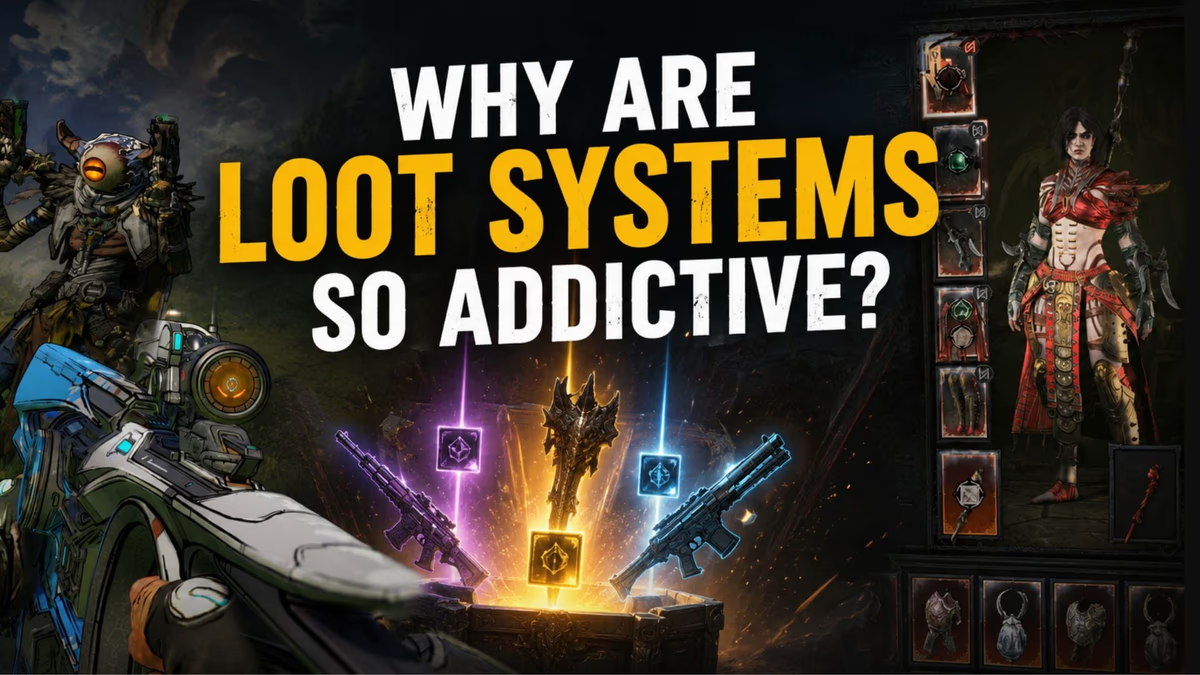
¿Por qué no podemos dejar de jugar juegos impulsados por botín?
Desde los primeros días de Diablo hasta los blockbusters modernos, los sistemas de botín han cautivado a los jugadores de todo el mundo. Descubre los ganchos psicológicos que hacen que estas recompensas aleatorias sean tan irresistibles. La emoción de recibir un botín raro después de numerosos intentos es adictiva y ha llevado a debates significativos sobre el diseño de juegos y la salud mental de los jugadores.
La emoción de derrotar a un enemigo, abrir un cofre o completar una misión, y ver cómo llueven los objetos, es una historia tan antigua como la propia historia de los videojuegos. Para muchos, este es el núcleo de la emoción en juegos como Destiny, Diablo y muchos otros. El atractivo de las recompensas aleatorias, a menudo codificadas por colores para indicar su rareza, ha impulsado algunas de las bases de jugadores más dedicadas de la industria. Esta mecánica aparentemente simple, popularizada por Diablo en 1996, ha evolucionado dramáticamente, infiltrándose en prácticamente todos los géneros, desde los MMO hasta las aventuras de un solo jugador, creando un bucle de juego adictivo que mantiene a los jugadores regresando por más.
La Psicología del Botín Perfecto
Los creadores de Diablo reconocieron el papel central del botín en su filosofía de diseño. "Creo que, cuando nos propusimos hacer Diablo, fue -no realmente una sorpresa aquí- todo sobre el botín", explicó uno de los desarrolladores del juego, David. Este enfoque en el 'ciclo del botín' -el ciclo de adquirir, usar y mejorar el equipo- es lo que mantiene a los jugadores comprometidos. El elemento sorpresa es clave; nunca sabes exactamente qué vas a obtener, y es precisamente esa incertidumbre lo que hace que la recompensa potencial sea tan emocionante. Esta 'mecánica de sorpresa' ha sido una piedra angular de los ARPG y los juegos de disparos con botín, impulsando su diseño y asegurando que los jugadores estén constantemente esforzándose por obtener el siguiente objeto, potencialmente capaz de cambiar el juego.
Cajas de Botín y la Difuminación de Líneas
Si bien el concepto central del botín en el juego ha estado presente durante décadas, la llegada de las cajas de botín ha intensificado estos debates. Estos sistemas de recompensas aleatorias, a menudo comprables con dinero real, han sido ampliamente criticados como una forma de 'micro-juego'. Los organismos reguladores han tomado nota, y el trastorno de juego, relacionado con el trastorno de juego, ha sido oficialmente incluido en la CIE-11. El debate continúa sobre la ética del diseño de juegos cuando se trata de estos sistemas, resaltando la fina línea entre el juego atractivo y las mecánicas adictivas potencialmente dañinas.
Próximos Pasos
A medida que los juegos continúan evolucionando, también lo harán sus sistemas de botín. Los desarrolladores están experimentando constantemente con nuevas formas de entregar recompensas, equilibrando la satisfacción del jugador con consideraciones éticas. Los títulos futuros explorarán sin duda esta potente mezcla de psicología y juego, ofreciendo experiencias aún más inmersivas y emocionantes para los jugadores.
Loot systems tap into primal reward pathways, making them a powerful, and sometimes problematic, design choice that continues to evolve across game genres.




WeCult App
Track your games — all in one place
Follow releases, track progress, discover what matches your taste. Rate "¿Por qué no podemos dejar de jugar juego…" on the app.
Artículos Relacionados
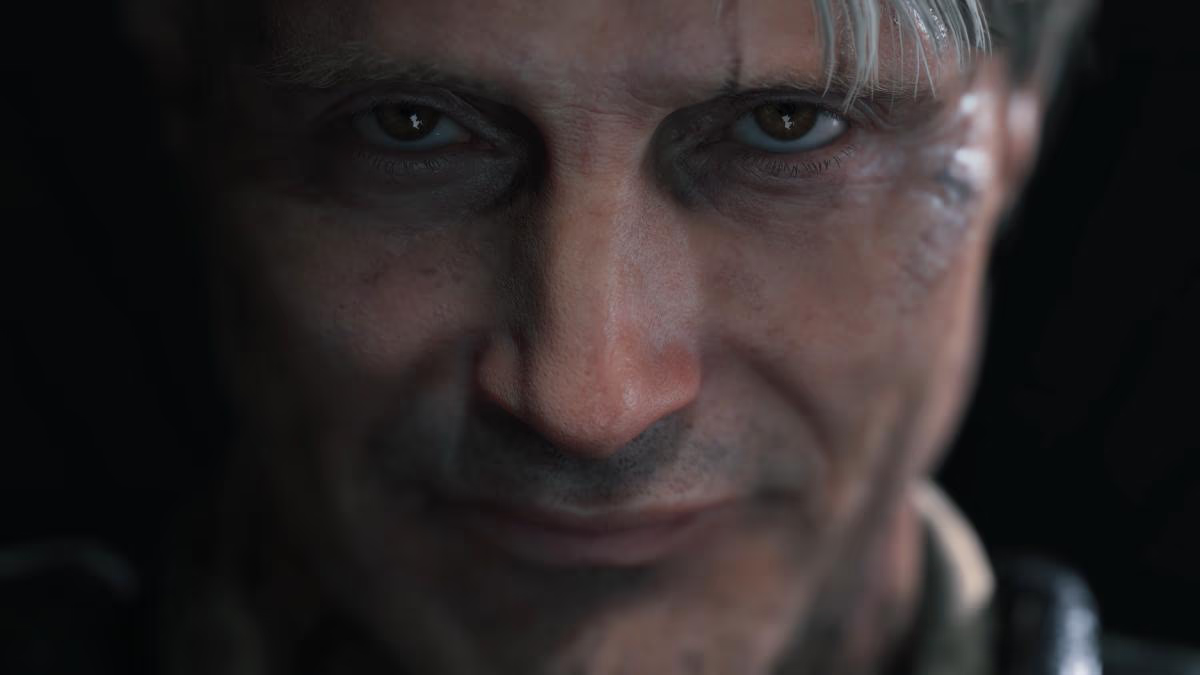
Robert Pattinson: El Actor que el Mundo de los Videojuegos Necesita
Robert Pattinson ha demostrado ser uno de los actores más versátiles de Hollywood, con una capacidad única para interpretar personajes complejos y emocionales. Su talento y dedicación lo convierten en el candidato perfecto para un papel principal en un videojuego.

Backrooms Rompe Récord de A24, Superando a Star Wars con más de $85M en su Estreno
La fenómeno de internet **Backrooms** ha logrado un debut asombroso en taquilla, recaudando más de $85 millones y superando el récord anterior de A24. Esta película de terror surrealista ha demostrado ser un éxito inesperado, similar a los que se han visto en el mundo de los videojuegos. Con una recaudación que supera a la de **The Mandalorian y Grogu**, **Backrooms** se ha convertido en un éxito sin precedentes.

El nacimiento problemático de Unreal 2: una secuela condenada por su propio rescate
Una vez destinada a redimir el FPS, **Unreal 2: El Despertar** se convirtió en una historia de alerta sobre el infierno de desarrollo. Rescatar el juego significó sacrificar sus ambiciones revolucionarias, dejando a los fans con una sombra de lo que podría haber sido.