 WeCult App
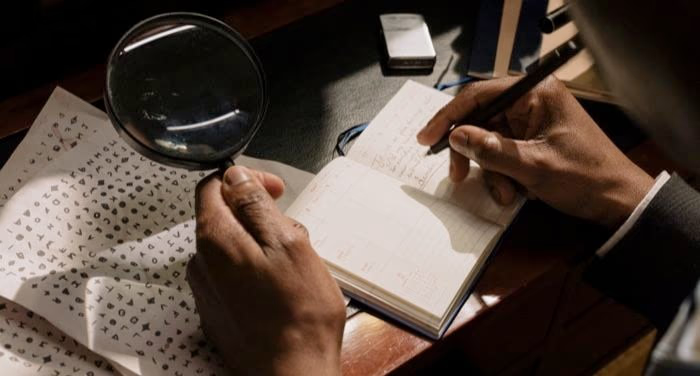
The New York Times Names 50 Best Thrillers: A Debate Ignites
The New York Times has unveiled its list of the 50 Best Thrillers of the 21st Century, sparking conversation among literary circles. The esteemed publication's selection has drawn particular attention for its broad interpretation of the genre.
The hallowed pages of The New York Times have just bestowed upon us a curated collection: The 50 Best Thrillers of the 21st Century. This compilation, intended to guide readers through the most pulse-pounding narratives of our time, has quickly become a focal point for discussion within the literary community, particularly among avid fans of suspense and mystery.
The list, as noted by some observers, leans heavily into crime fiction, leading to a lively debate about genre definitions. While the intention was to highlight thrillers, many of the included works are celebrated for their intricate plotting and character development within the crime and mystery spheres, rather than fitting the strict definition of a thriller, which often emphasizes escalating tension and immediate peril. This distinction, though perhaps subtle to some, is a significant one for those who deeply appreciate the craft of storytelling across different genres.
Genre Lines Blurred
This particular selection from The New York Times has reignited a conversation that has been simmering for some time: the interchangeable use of terms like "thriller," "mystery," and "crime." While these genres share common ground in their ability to keep readers on the edge of their seats, they each possess unique characteristics. Thrillers often focus on a protagonist facing imminent danger or a race against time, while mysteries center on solving a puzzle or uncovering a hidden truth, and crime fiction delves into the criminal act itself and its consequences. The New York Times' list, by including acclaimed crime novels, seems to embrace a more expansive view, inviting readers to explore excellent authors like Jennifer Hillier and Attica Locke, whose works are lauded for their depth and impact, regardless of precise genre classification.
What This Means for Readers
For the passionate readers who devour every new release and discuss plot twists with fervor, this list serves as both a treasure trove and a conversation starter. It's an opportunity to discover new authors or revisit beloved ones, potentially finding gems that blur the lines between genres. The debate itself underscores the vibrant and evolving nature of fiction. It encourages a deeper engagement with the books we read, prompting us to consider why we enjoy them and how authors masterfully employ different narrative techniques to achieve suspense, intrigue, and emotional resonance. It’s a testament to the power of well-crafted stories that they can spark such passionate discourse and introduce readers to a wider world of compelling narratives.
What's Next
While The New York Times list focuses on past achievements, the world of thrillers and crime fiction continues to expand. Fans can look forward to upcoming releases from celebrated authors and debut novelists alike, promising more suspenseful reads and genre-bending narratives that will undoubtedly fuel future discussions.
This list offers a fascinating lens through which to examine the evolving definition of the thriller genre and its overlap with crime and mystery fiction.



WeCult App
Track your books — all in one place
Follow releases, track progress, discover what matches your taste. Rate "The New York Times Names 50 Best Thrille…" on the app.
Artículos Relacionados
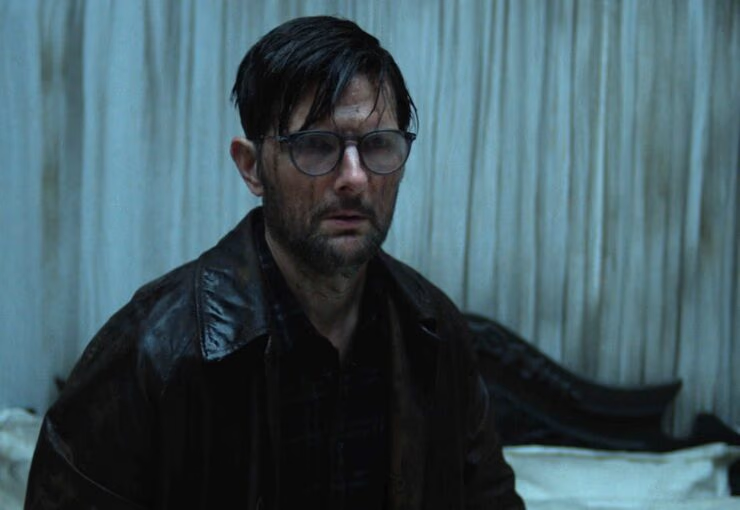
Damian McCarthy's 'Hokum' Drops on Hulu Just in Time for Halloween
Get ready for a chilling Halloween season as director Damian McCarthy's latest folk horror, 'Hokum,' arrives on Hulu. The film stars Adam Scott as a writer grappling with grief and inspiration in the Irish countryside.
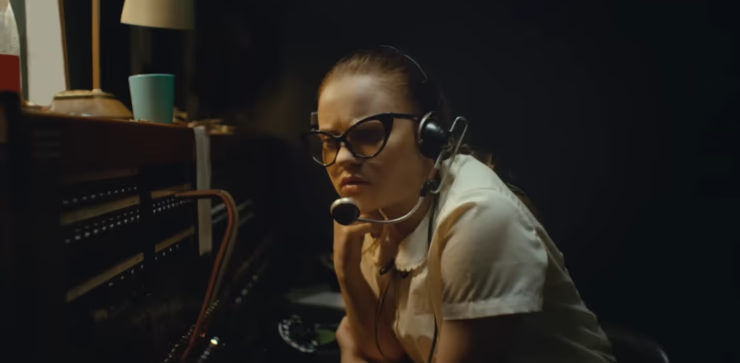
The Vast of Night Returns: Director Reclaims Rights After Streaming Vanishing
Fans were left scratching their heads when the acclaimed sci-fi mystery **The Vast of Night** mysteriously vanished from Prime Video. Now, the reason behind its disappearance and its potential future have finally come to light.

Anya Taylor-Joy and Octavia Spencer Lead New Streaming Thrills This Weekend
This weekend's streaming lineup offers a mix of high-stakes thrillers and action-packed comedies, featuring star power from Anya Taylor-Joy and Octavia Spencer.