 WeCult App
From Goethe's Melancholy to Object Narrators: A Literary Journey Through August's Best
This week's literary landscape offers a rich tapestry of classic reflections and contemporary insights. From the enduring legacy of Johann Wolfgang von Goethe to the innovative perspectives of object narrators, discover the stories shaping our understanding of craft and culture.
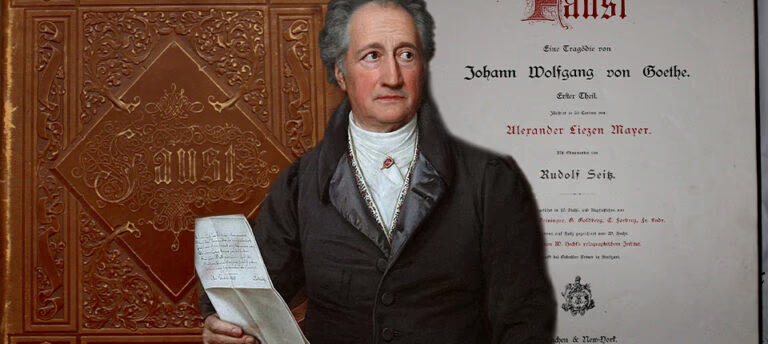
August's literary scene, as illuminated by the latest dispatches from Literary Hub, offers a compelling blend of historical reverence and forward-thinking criticism. We begin with a nod to the monumental Johann Wolfgang von Goethe, born in 1749, whose profound, often melancholic, works continue to resonate. His approach to writing, characterized by "shy, exaggerated empathy," serves as a poignant reminder of the delicate balance between personal vulnerability and artistic expression. This contemplation of emotional depth in writing is echoed in reflections on translating the work of poet Antonella Anedda, where the act of translation itself "creates space for other ways of telling," inviting readers into nuanced perspectives.
Beyond the introspection of individual artists, the power of narrative perspective is explored through the fascinating lens of object narrators. These unconventional storytellers, tracing a lineage from the 18th century to the present, offer humans a unique opportunity to "see the world in different ways." This structural innovation in storytelling is a testament to the enduring human drive to find new ways to understand ourselves and our surroundings. It’s a craft element that’s particularly relevant when considering how authors situate their historical fiction, with advice urging writers to integrate exposition naturally, avoiding the pitfall of "wheeling in some talkative NPC just to explain why the townsfolk are acting skittish."
August's Acclaimed Reads
The month's best-reviewed books showcase this diverse approach to storytelling. Among them are Chang-Rae Lee’s A Tender Age, Jill Lepore’s The Rise and Fall of the Artificial State, Téa Obreht’s Sunrise, and Dave Zirin’s The People’s Historian. Each of these titles, in its own way, grapples with complex themes and demonstrates mastery of narrative craft, earning them a place on critics' esteemed lists. Furthermore, a compelling excerpt from Jiyar Jahin Fard’s novel The Shadeless Border, translated by Chiya Parvizpur, offers a taste of evocative fiction, beginning with the striking image of "twilight. A horse approached, and from its speed it was clear that it intended to cross me."
Beyond the Page: Art, Academia, and Addiction
The literary conversation extends beyond traditional novels and poetry. Marc Sobel’s analysis of Dash Shaw’s graphic novel Like Swimmers delves into the intersection of "fine art and popular art," examining how the work borrows from detective fiction while exploring broader artistic divides. On a different note, Elizabeth Metzger’s look at Franz Wright’s final poetry collection highlights work "written from the realms of mental illness, addiction, religious conversion, and a weighty poetic lineage," underscoring poetry's capacity to confront profound human struggles. Meanwhile, Jeremy Varon’s examination of The New School provides a critical look at the state of higher education, proving that the spirit of critical inquiry and insightful commentary is alive and well across various intellectual spheres.
What's Next
As August draws to a close, these diverse literary discussions lay the groundwork for continued exploration of storytelling's evolving forms and enduring power. Keep an eye on new releases from acclaimed authors and emerging voices who continue to push the boundaries of narrative.
This compilation highlights how literary analysis continues to explore both historical giants and experimental narrative techniques, offering fresh lenses for readers and writers alike.
WeCult App
Track your books — all in one place
Follow releases, track progress, discover what matches your taste. Rate "From Goethe's Melancholy to Object Narra…" on the app.
Artículos Relacionados
Literary Hub Unpacks September 2026's Most Provocative Reads
From queer Afghan refugees to the legacy of "Sleepy Hollow," Literary Hub's latest dispatches offer a compelling look at contemporary storytelling and historical reflection.
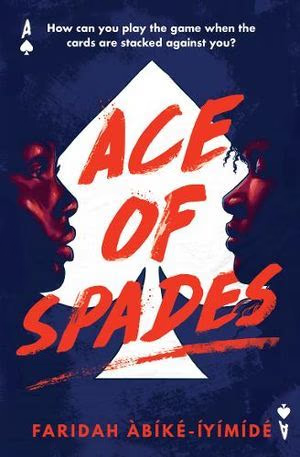
5 Campus Mysteries to Haunt Your Fall Reading List
As autumn leaves fall, so do bodies on spooky campuses. Dive into the enduring trend of campus mysteries, where dark academia meets thrilling whodunits.
Unearthing Mexico's Literary Heart: From Ancient Echoes to Modern Masterpieces
Explore the rich tapestry of Mexican literature, a vibrant tradition that bridges pre-Columbian roots with contemporary global influence. Discover how this unique narrative landscape reflects history, identity, and the very evolution of storytelling.