 WeCult App
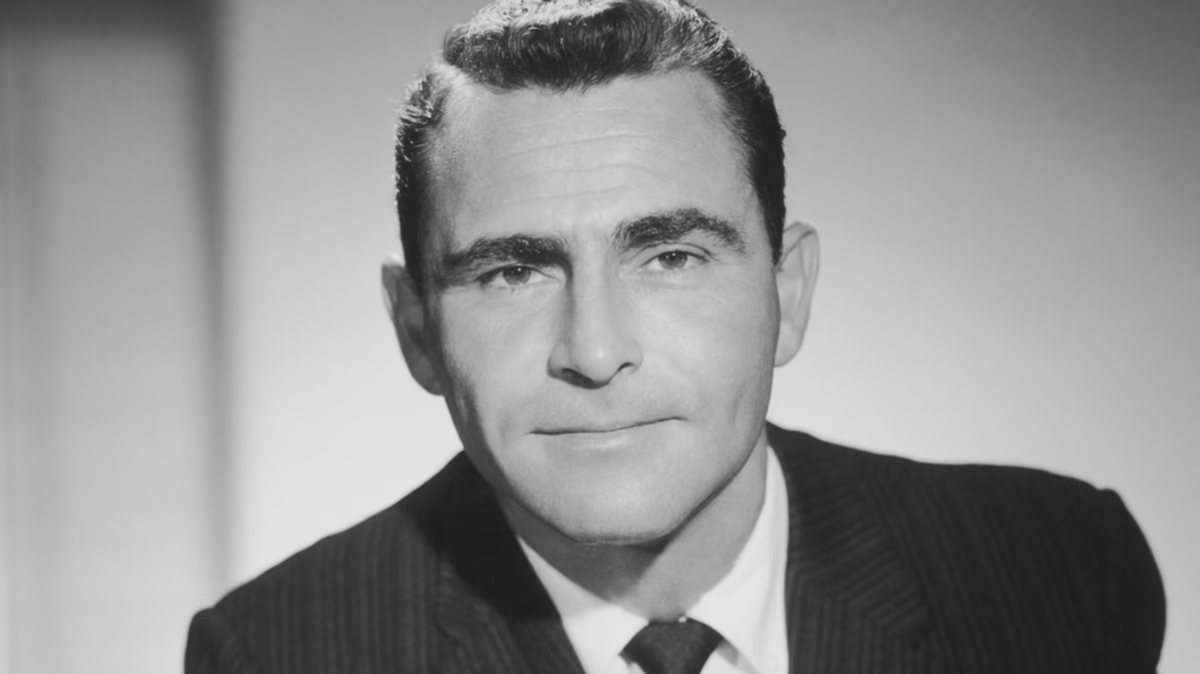
Rod Serling Only Adapted One Ray Bradbury Story for The Twilight Zone
Ray Bradbury was a literary titan, but his stories found a surprising roadblock when it came to Rod Serling's iconic The Twilight Zone. Discover why only one adaptation ever made it to air.
Ray Bradbury, a name synonymous with speculative fiction and lyrical prose, was initially envisioned as a significant contributor to Rod Serling's groundbreaking series, The Twilight Zone. Yet, despite Bradbury's established literary prowess, his collaboration with the show proved unexpectedly sparse. Only a single story, "I Sing the Body Electric!," was ever produced and aired as the 100th episode of the series. The reasons behind this limited output are rooted in the fundamental differences between Bradbury's writing style and the demands of television production, particularly for a show that thrived on tight pacing and visual storytelling.
Serling himself offered insight into the difficulty of adapting Bradbury's work. He famously noted that Bradbury was "a very difficult guy to dramatize, because that which reads so beautifully on the printed page doesn't fit in the mouth — it fits in the head." This suggests a disconnect between Bradbury's internal, poetic narratives and the external, dialogue-driven format of television. While his prose could evoke profound emotions and complex inner worlds through description and introspection, translating that richness into concise, actable scenes proved a significant hurdle. Scripts like "Here There Be Tygers" were accepted but ultimately never filmed, with the official reason often cited as being "too expensive to shoot," though the underlying creative challenges likely played a larger role.
The Literary vs. The Visual
Bradbury's literary output spanned a vast spectrum, from prescient sci-fi like Fahrenheit 451 to nostalgic reflections on simpler times in Dandelion Wine. His ability to weave magic with words was undeniable. However, The Twilight Zone demanded a different kind of magic – one that could be conveyed within the constraints of a 30-minute episode, often on a limited budget. Serling, a master of concise, impactful teleplays, had to ensure that stories moved swiftly and resonated visually. Bradbury's more expansive, descriptive style, while beautiful on the page, may have required extensive and costly reshoots or rewrites to fit the show's format, making him a challenging, albeit brilliant, collaborator.
Fan Reaction and Legacy
The scarcity of Bradbury's contributions to The Twilight Zone is a point of fascination for fans who admire both creators. It highlights the unique alchemy required to bring beloved literature to the screen, proving that even the most celebrated authors can face creative friction when adapting their work for a different medium. The fact that "I Sing the Body Electric!" was produced, and is often remembered fondly, underscores the potential of their collaboration, while the unproduced scripts remain tantalizing 'what-ifs' for genre enthusiasts. It's a testament to Serling's vision that he recognized Bradbury's talent, even if fully realizing it within the show's framework proved elusive.
What's Next
While no new collaborations between the estates of Rod Serling and Ray Bradbury for The Twilight Zone have been announced, the original series continues to be celebrated and revisited by fans worldwide. New adaptations and continuations of The Twilight Zone have explored different facets of the human condition, proving the enduring power of Serling's original concept.
This deep dive into the creative friction between two genre legends offers a compelling look at the challenges of translating literary genius to the small screen.




WeCult App
Track your series — all in one place
Follow releases, track progress, discover what matches your taste. Rate "Rod Serling Only Adapted One Ray Bradbur…" on the app.
More Like This
Nolan's Odyssey Isn't Alone: 5 TV Shows That Sailed Homer's Epic
Christopher Nolan's highly anticipated take on The Odyssey is on the horizon, but it's far from the first time Homer's epic journey has been reimagined for the screen. Television has a rich history of adapting Odysseus's arduous voyage.
Mike Flanagan's 'The Midnight Club' Is an Underrated Netflix Horror Gem
While not every project hits the mark, one of Mike Flanagan's Netflix series deserves a second look. 'The Midnight Club' stands out as an unfinished horror masterpiece that fans shouldn't overlook.
VisionQuest Reveals Tommy Maximoff's Wild Comic Origins Just Got Weirder
Marvel's VisionQuest is diving deep into the bizarre resurrection of Tommy Maximoff. The Disney+ series is already pushing boundaries, but the comics offer an even wilder look at Speed's twisted past.