 WeCult App
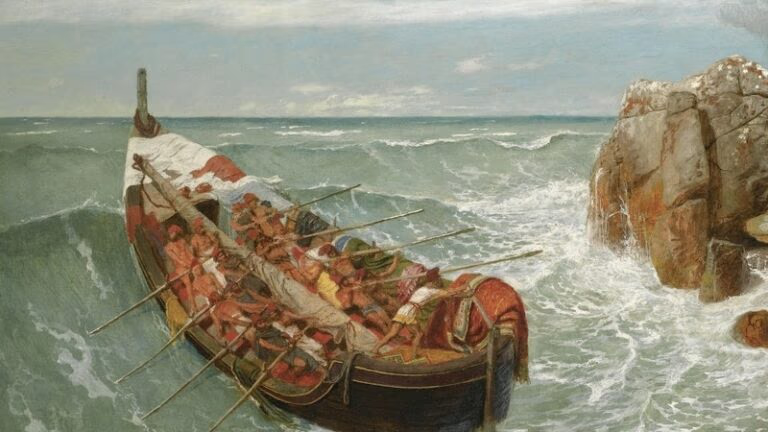
Why We Keep Returning to Homer's Odyssey, Millennia Later
The ancient epic poem **The Odyssey** continues to resonate deeply, offering timeless insights into the human condition. Its enduring power lies in the profound concept of 'nostos,' the longing for home.
The first time many of us encounter The Odyssey, it’s through the thrilling tales of fantastical creatures, alien cultures, and a hero's desperate, decade-long search for home. But the magic of Homer’s epic extends far beyond its adventurous plot. It’s a story that, upon repeated readings, reveals deeper layers of meaning about the world, ourselves, and the very nature of existence. This enduring appeal, especially for those navigating their own complex journeys, is captured by the ancient Greek concept of nostos — homecoming.
This idea of nostos is the gravitational pull that draws readers back to Odysseus’s arduous voyage. Unlike Odysseus, who yearns for a singular, ancestral home on the rugged island of Ithaca, many modern readers find themselves in a more fluid relationship with 'home.' Having perhaps lived in numerous places, the search becomes less about a physical location and more about finding a sense of belonging and self-realization in a constantly shifting world. The allegorical encounters with Lotus Eaters, Sirens, and Cyclops can be found not just in mythical lands, but in the diverse experiences and challenges faced throughout life, prompting a similar quest for understanding and identity.
The Enduring Power of Nostos
The Odyssey is more than just an ancient adventure; it’s a profound exploration of longing, resilience, and the multifaceted nature of homecoming. While The Iliad might be seen as a story for the young, The Odyssey speaks more directly to those who have experienced the world and begun to feel the pull of return. The richness of the epic unfolds with age and experience, mirroring Odysseus's own journey. The text itself often feels familiar, perhaps because so many subsequent narratives, from classic literature to contemporary media, are modeled on Homer's foundational tale. The poem’s structure, with its recurring epithets and poetic devices, contributes to this sense of deep-rooted familiarity, anchoring our understanding of what a story can be.
Why This Story Still Matters
In an era where content consumption is often rapid and mobile-first, The Odyssey offers a powerful counterpoint – a reminder of the value of a deep, sustained engagement with narrative. It champions the idea that stories can provide not just entertainment, but also crucial frameworks for making sense of chaos and striving for meaning. The journey of Odysseus resonates because it mirrors our own struggles with adversity, temptation, and the universal desire to find our place in the world. The concept of nostos remains potent, encouraging us to reflect on what 'home' truly means in our own lives, whether it's a place, a community, or a state of being.
What's Next
While no immediate film or TV adaptations are on the immediate horizon, the enduring legacy of The Odyssey continues to inspire new creative works and academic discussions. Readers are encouraged to revisit translations or explore scholarly analyses that shed new light on its timeless themes.
For avid readers and curious newcomers alike, **The Odyssey** serves as a foundational text, demonstrating how core narrative structures and universal themes of journey and belonging have shaped storytelling for centuries.

WeCult App
Track your books — all in one place
Follow releases, track progress, discover what matches your taste. Rate "Why We Keep Returning to Homer's Odyssey…" on the app.
More Like This

Nolan's Odyssey Sparks 1400% Surge in UK Poetry Book Sales
Christopher Nolan's epic reimagining of Homer's "The Odyssey" has sent shockwaves through the UK literary market, driving unprecedented sales for classical poetry. The film's success is breathing new life into ancient epics, proving that timeless stories can still capture a modern audience.

IMAX Can't Build More 70mm Projectors for The Odyssey, CEO Confirms
Demand for Christopher Nolan's **The Odyssey** in its ideal 70mm IMAX format is astronomically high, but supply is severely limited. IMAX CEO Richard Gelfond has revealed a surprising reason why more screenings aren't possible.
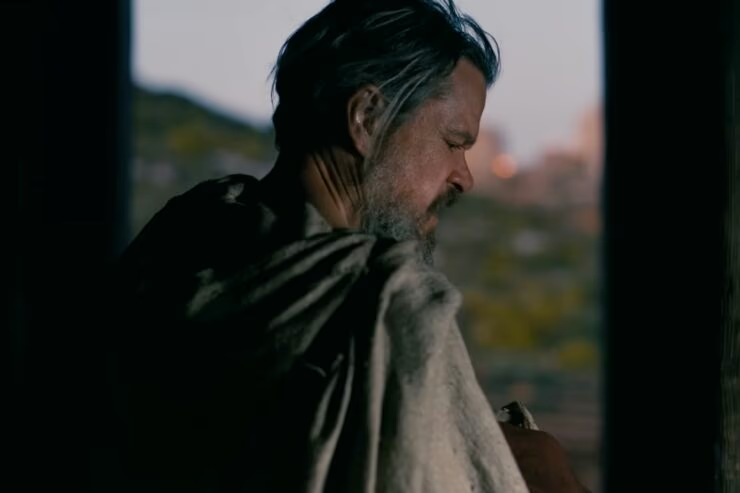
Christopher Nolan Finally Fills a 'Fantasy Movie Gap' With The Odyssey
The acclaimed director reveals his long-held ambition to adapt Homer's epic, explaining why he believes the genre has been surprisingly underserved in cinema. Nolan sees a unique opportunity to bring the foundational myth to the big screen with his signature grand scale.