 WeCult App
Beyond Aristotle: The Unexpected Power of Fleeting Friendships
New insights challenge the age-old belief that only lasting relationships hold value. Discover how brief encounters can offer profound connection and self-discovery.
From the ancient wisdom of Aristotle, we've inherited a deep-seated reverence for relationships that endure. The longer the bond, the greater its perceived value. But this perspective, while comforting, can leave us overlooking a vital aspect of human experience: the unexpected power found in fleeting friendships. These transient connections, though brief, can offer moments of profound intimacy and catharsis that shape us in ways we might not expect.
Russian culture offers a fascinating lens through which to view this phenomenon. The concept of a poputchik—a stranger met on a journey with whom one shares intimate confessions, precisely because they will never be seen again—captures this idea beautifully. It's a notion echoed in classic literature, such as Leo Tolstoy's The Kreutzer Sonata, where the train journey becomes a confessional space for a man burdened by his past. Similarly, Venedikt Erofeev's Moscow to the End of the Line features a retired cable fitter who, during a drunken train ride, delivers a sprawling monologue on life, love, and societal woes. These narratives suggest that sometimes, the safest space for vulnerability is with someone outside our established social circles, someone who offers a temporary, non-judgmental ear.
The Literary Landscape of Transient Bonds
While the idea of the poputchik is deeply embedded in Russian literary tradition, the exploration of friendships, both lasting and ephemeral, is a universal theme. Writers like Hua Hsu in his memoir Stay True delve into the impact of formative college friendships, even those tragically cut short. His work, alongside Kamala Shamsie's novel Best of Friends, which charts the evolving dynamic between two girls from adolescence into adulthood, highlights how friendships, in all their forms, fundamentally shape our identities. Even in contemporary fiction, such as Sheila O'Flanagan's Secrets Between Friends, the complexities and emotional weight of relationships, including those tested by time and circumstance, remain central.
Cultivating Connections, Big and Small
In an era where we often strive to build and maintain long-term relationships, it's easy to dismiss the significance of encounters that don't fit the traditional mold. Yet, as author and friendship expert Danielle Bayard Jackson notes in her book Fighting for our Friendships, good friendships require practice and intentionality. This practice isn't limited to those we see every day. The principles of showing up, listening, and offering support can be applied even in brief interactions. Recognizing the value in a poputchik or a fellow traveler encourages us to be more open and present in all our encounters, understanding that meaningful connection can arise from the most unexpected places and people.
What's Next
As authors continue to explore the multifaceted nature of human connection, we can anticipate more literary works that challenge our assumptions about friendship. Keep an eye on new releases that delve into the complexities of relationships, both enduring and fleeting, offering fresh perspectives on how these bonds shape our lives.
This article explores the literary and cultural significance of transient relationships, resonating with readers interested in the nuances of human connection and storytelling.




WeCult App
Track your books — all in one place
Follow releases, track progress, discover what matches your taste. Rate "Beyond Aristotle: The Unexpected Power o…" on the app.
More Like This

The Rings of Power Officially Confirms Season 4, Filming Set for Spring
Amazon has officially announced a fourth season for **The Lord of the Rings: The Rings of Power**, confirming its return amidst the ongoing release of its third season. Pre-production is already underway in the UK, with filming scheduled to begin this spring.

Avengers: Doomsday Trailer Drops Key Heroes Still Missing From The Epic Finale
The latest trailer for Marvel's 'Avengers: Doomsday' has offered a tantalizing glimpse into the upcoming epic, but a surprising number of fan-favorite characters remain conspicuously absent. As anticipation builds for the 2026 blockbuster, fans are dissecting every frame for clues, and the missing faces are sparking intense speculation.
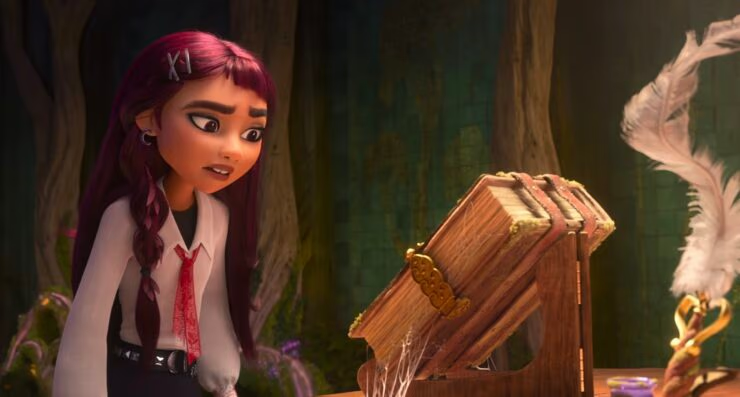
Hexed's Creative Chaos Mirrors Wildwood's Own Tumultuous Journey
Disney's animated feature Hexed has arrived, but its behind-the-scenes drama and narrative echoes of Wildwood leave us questioning the magic. The film's journey from conception to screen was marked by significant shifts, prompting a deeper look at its creative process.