 WeCult App
Singapore Film Fest Defends 'The Assassin(s)' Amidst Conservative Backlash
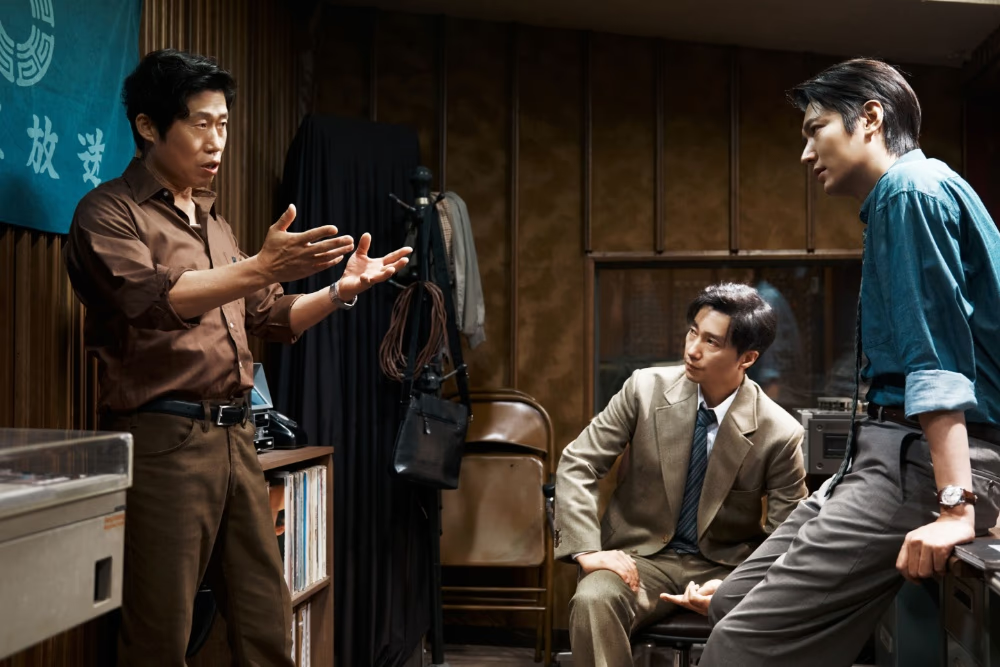
The Singapore International Film Festival (SGIFF) is standing firm on its decision to open with Hur Jin-ho's 'The Assassin(s)', despite a concerted effort by South Korean conservatives to have the film removed. The festival's commitment to the film highlights a tension between artistic programming and political pressure.
The 37th Singapore International Film Festival (SGIFF) is set to commence with Hur Jin-ho's latest thriller, 'The Assassin(s)', on October 21st. This selection, however, has ignited controversy, drawing intense scrutiny and demands for its withdrawal from conservative factions within South Korea. Notably, all 109 lawmakers from South Korea's conservative People Power Party (PPP) formally requested the festival to pull the film, citing concerns over its historical narrative. Despite this significant political pressure, the SGIFF has maintained its programming, issuing a statement that, while acknowledging awareness of the situation, made no direct mention of the PPP's petition.
This isn't the first time a film has faced such opposition. The controversy stems from accusations that 'The Assassin(s)' allegedly distorts the historical events surrounding the 1974 assassination attempt on the First Lady. South Korean netizens have voiced their protests online, flooding the festival's social media with calls for the film's removal, labeling it as historically inaccurate. However, film festivals often serve as crucial platforms for artistic expression and dialogue, and SGIFF's decision to proceed suggests a commitment to its curatorial choices, even in the face of external political objections. The festival’s programming for this year also includes honors for cinematic luminaries like Aamir Khan and Hirokazu Koreeda, signaling a broader celebration of global cinema.
Festival's Artistic Integrity on Display
The SGIFF's unwavering stance on 'The Assassin(s)' places the spotlight on the broader debate surrounding artistic freedom versus historical sensitivity. Festivals are often seen as spaces where challenging narratives can be explored and discussed, providing a platform for filmmakers to present their interpretations of events. By upholding its selection, the Singapore International Film Festival is asserting its independence as a cultural institution, prioritizing its curated program over appeasing specific political demands. This decision is particularly significant given the film's role as the opening night feature, a prominent slot intended to set the tone for the entire event.
The reaction from South Korean conservative groups, spearheaded by the People Power Party, highlights a potent concern about how historical events are portrayed on screen. The party has been actively working to submit a petition to the SGIFF, aiming to persuade the festival organizers to reconsider their decision. This pushback indicates a strong desire among certain groups to control the narrative surrounding sensitive historical moments. The festival's commitment to screening the film suggests a belief in the power of cinema to provoke thought and discussion, rather than sanitize history.
What This Means for Film Fans
For cinephiles and casual moviegoers alike, this situation raises important questions about the role of film festivals in a globalized world. It underscores the potential for political interference in artistic endeavors and the bravery required by festivals to stand by their selections. The controversy surrounding 'The Assassin(s)' is likely to draw more attention to the film, sparking conversations among audiences about its content and the historical events it depicts. It also serves as a reminder that film is rarely just entertainment; it is often a powerful medium for exploring complex societal and historical issues, and its reception can be as multifaceted as the stories it tells.
What's Next
The 37th Singapore International Film Festival runs from October 21st to November 1st. Audiences will have the opportunity to experience 'The Assassin(s)' as the opening film, and it will be interesting to observe the discussions and reactions that emerge following its screenings.
This situation underscores the delicate balance festivals must strike between showcasing diverse cinematic voices and navigating the complex socio-political landscapes from which those films emerge.
WeCult App
Track your films — all in one place
Follow releases, track progress, discover what matches your taste. Rate "Singapore Film Fest Defends 'The Assassi…" on the app.
More Like This

Edinburgh Film Festival Sets 2027 Dates for Milestone 80th Edition
The iconic Edinburgh International Film Festival has officially announced its dates for the 2027 edition, promising a celebration of its rich history and a look towards the future of cinema. This milestone event will mark 80 years of showcasing groundbreaking films and nurturing new talent.
Rio Film Festival Crowns 'The Riverbank' and 'Elza' Top Honors
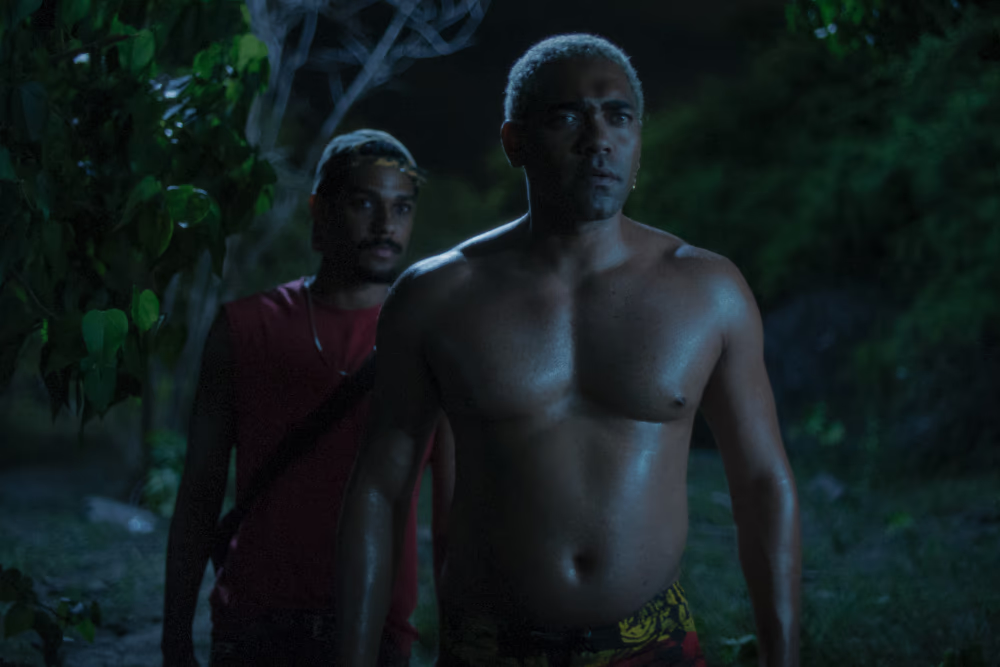
The Rio Film Festival has concluded its latest edition, celebrating cinematic excellence with 'The Riverbank' taking home the Best Fiction Feature Film award and 'Elza' securing Best Documentary Feature Film. The prestigious event highlighted a strong slate of Brazilian cinema.

Tom Cruise Defends 'Digger' Amid Box Office Struggles: 'So Proud'
Despite a tough opening weekend for Alejandro G. Iñárritu's latest film, Tom Cruise has publicly voiced his unwavering support and pride in the ambitious project. The statement comes as the Warner Bros. release navigates a challenging box office reception.