 WeCult App

The Witcher 4 Ditches REDengine: CD Projekt Red Explains Why Now
CD Projekt Red has officially confirmed The Witcher 4 will utilize Unreal Engine 5, moving away from their proprietary REDengine. Studio leadership clarifies this strategic shift is about future ambitions, not past technical struggles.
The upcoming fourth installment in The Witcher saga is set to represent a monumental change for CD Projekt Red, not just in its narrative lead but also in its technological foundation. In a recent discussion, the studio’s co-CEO, Michał Nowakowski, clarified that the decision to abandon their long-standing REDengine in favor of Unreal Engine 5 for The Witcher 4 was a proactive, strategic choice, emphatically denying speculation that it was a direct response to the technical difficulties encountered during Cyberpunk 2077's launch.
Nowakowski stressed that the issues surrounding Cyberpunk 2077 were not inherent to the REDengine itself. Instead, he explained that the core motivation behind adopting Unreal Engine 5 stems from a fundamental philosophy at CD Projekt Red. "The dream of the company was actually never to make technology," Nowakowski stated, highlighting that their primary focus has always been on crafting compelling narratives and immersive experiences. While the studio aimed to create "visually and technically cutting edge games," which led them to develop their own engine, the advent of Unreal Engine 5 presented a new, more appealing path. Witnessing the capabilities of Epic Games' engine, particularly through demos like The Matrix Awakens, convinced leadership that a partnership with Epic would be more efficient than continuing to build and maintain their own complex technological infrastructure from scratch for each new project.
A Strategic Leap, Not a Retreat
The shift to Unreal Engine 5 is being framed as a strategic collaboration designed to accelerate development and leverage cutting-edge tools. Nowakowski elaborated that the REDengine required substantial rebuilding for each new title, a process that could be streamlined by adopting a robust third-party solution. "If we form a relationship with Unreal and if we work on certain things which are specifically required to make games of the size and scope and certain technicalities about it that we need for the games, it could actually work," he recalled thinking, leading to the "strategic collaboration" with Epic. This move allows CD Projekt Red to concentrate its resources on what it does best: storytelling and world-building, rather than diverting significant effort into engine development.
Fan Reaction and Future Implications
For the passionate global fanbase of The Witcher, this announcement carries significant weight. While Cyberpunk 2077's rocky launch left many concerned about the studio's technical prowess, this clarification should alleviate some of those worries. The move to Unreal Engine 5 signals an intent to harness powerful, proven technology to deliver the high-quality, immersive experience fans expect from the franchise. The focus remains on delivering a game that pushes boundaries in narrative and gameplay, with the engine acting as a tool to achieve that vision. The community will undoubtedly be watching closely to see how this new technological foundation impacts the beloved world of Geralt and, now, Ciri.
What's Next
While details on The Witcher 4's development timeline and specific features remain under wraps, the commitment to Unreal Engine 5 sets a clear direction. Fans can anticipate further updates from CD Projekt Red as development progresses on what is poised to be a landmark title for the studio and the franchise.
This move signifies a major strategic pivot for CD Projekt Red, prioritizing narrative and immersive storytelling over in-house engine development, a decision that speaks volumes about the evolving landscape of game development.




WeCult App
Track your games — all in one place
Follow releases, track progress, discover what matches your taste. Rate "The Witcher 4 Ditches REDengine: CD Proj…" on the app.
More Like This
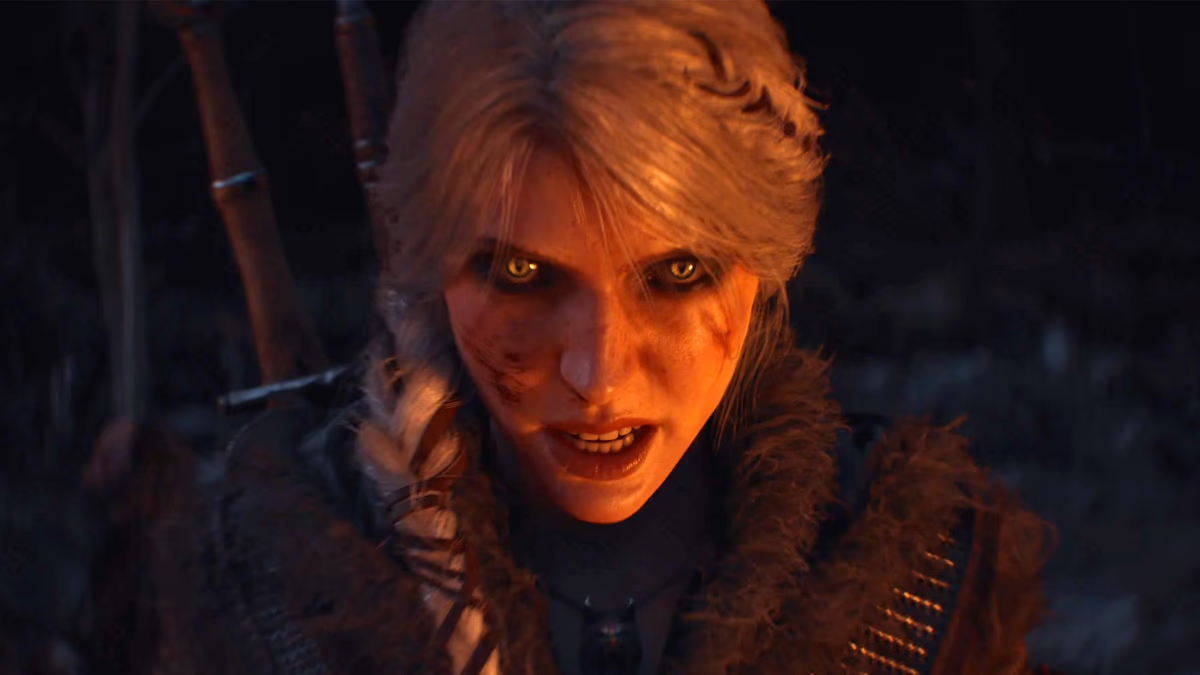
CDPR Co-CEO Hopes Witcher 4 Can Mend Cyberpunk 2077's 'Heartbreaking' Launch
CD Projekt Red's co-CEO acknowledges the studio hasn't fully redeemed itself after Cyberpunk 2077's disastrous launch. He expresses hope that the upcoming Witcher 4 will win back disillusioned fans.
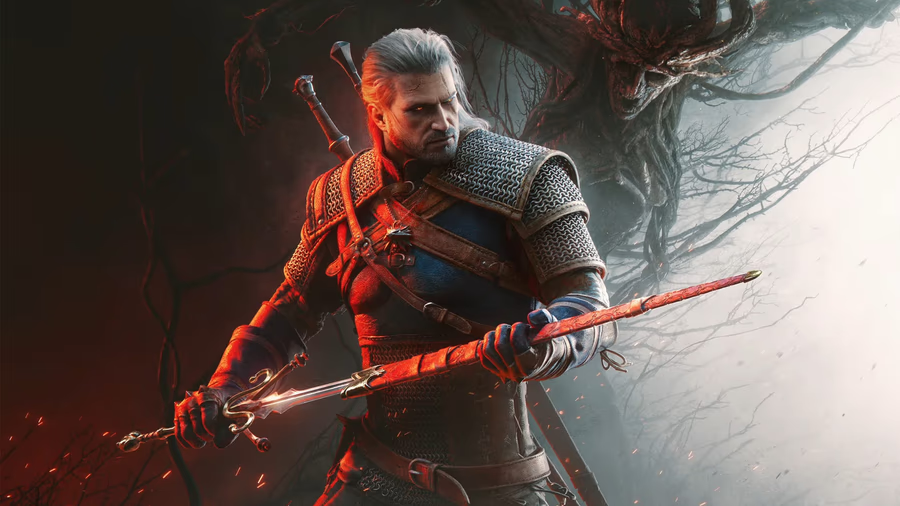
The Witcher 3's New Expansion, Songs of the Past, Arrives in 2027
CD Projekt Red has officially announced a surprising new expansion for The Witcher 3: Wild Hunt, titled Songs of the Past. The DLC is slated for a 2027 release, promising a return to Geralt's adventures.

The Witcher 3's 'Songs of the Past' Demo Arrives at PAX Australia
Get ready for more Witcher 3! CD Projekt RED and Fool's Theory are offering a behind-closed-doors demo of the upcoming 'Songs of the Past' expansion at PAX Australia, giving fans a glimpse into Geralt's next adventure.